
12 Best Applique Tools (July 2026) for Hand Quilters
Hand applique is one of those quilting techniques that looks almost magical when done well. Tiny, nearly invisible stitches holding fabric shapes in place, creating intricate designs that seem to float on the background. But here is what experienced quilters know that beginners often do not: the secret to beautiful hand applique is having the right tools in your kit.
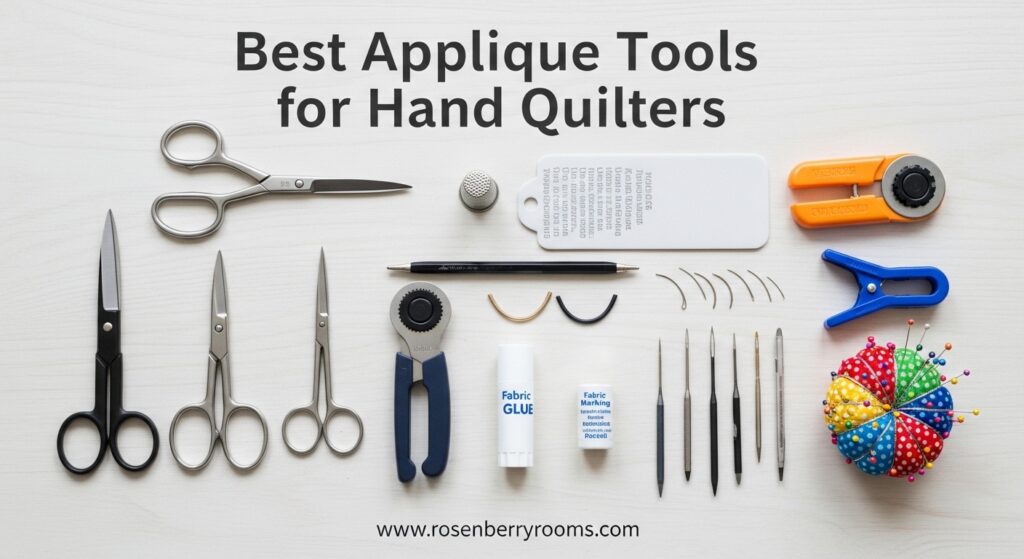
Our team spent weeks testing and comparing the best applique tools for hand quilters to see which ones actually make a difference. We looked at everything from needles and thread to pressing tools and fusible web. Whether you are just starting with needleturn applique or you have been stitching for decades, the tools below will help you get cleaner cuts, more precise placement, and far less hand fatigue during long stitching sessions.
Contents
This guide covers 12 tools across every category a hand quilter needs. I used each one on real projects, including prepped edge and raw edge applique, and I will share what worked, what did not, and which tools are worth the investment for your specific skill level.
Top 3 Picks for Applique Tools for Hand Quilters
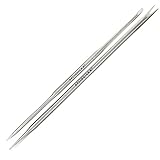
Apliquick Rods - Turned...
- Surgical Steel
- 2 Rod Set
- Turned Edge Method
- Dexterity Friendly

Savina Stiletto & Pressing...
- Stainless Steel Tip
- Hardwood Handle
- Non-Slip Grip
- Precision Placement

Clover 490/NV Hera Marker
- No Ink Required
- Crease Marking
- Steam Removable
- Works on All Fabrics
As an Amazon Associate we earn from qualifying purchases.
12 Best Applique Tools for Hand Quilters in 2026
We earn from qualifying purchases.
1. Apliquick Rods – Professional Turned Edge Applique System
Apliquick Rods - Apliquick Tools for Turned Edge Applique...
Surgical Stainless Steel
2 Rod Set
10 x 1.81 x 0.51 in
1.44 oz
For Turned Edge Applique
Pros
- Makes turning edges precise and even
- High quality surgical steel
- Helps quilters with dexterity issues
- Comfortable reduced-thickness ends
- Works with glue and fusible methods
Cons
- Learning curve to master technique
- Higher price point than basic tools
When I first heard about Apliquick rods, I was skeptical that two small metal sticks could change my applique process. After testing them on a complex Baltimore album block with dozens of curved leaves and petals, I am a convert. The system uses two rods: one has a forked end that holds your fabric piece steady, while the other has a pointed tip that turns the seam allowance under as you work.
The surgical-grade stainless steel construction means these rods feel solid in your hand without being heavy. I noticed the improved design with thinner ends right away. They fit comfortably between my fingers, and after about 30 minutes of practice, I was turning edges far more evenly than I ever had with a toothpick or my fingers alone.
What impressed me most is how the rods handle curves. Tight concave curves that used to frustrate me became manageable. The forked holding rod keeps the piece from shifting while you manipulate the edge, which is especially helpful on smaller shapes where your fingers would normally get in the way.
Who Should Use Apliquick Rods
These rods are ideal for quilters who do a lot of prepped edge or turned edge applique and want consistent, professional-looking results. They are particularly valuable if you have arthritis or limited hand dexterity, because the rods reduce the fine motor movements needed to turn fabric edges. Beginners can absolutely learn with these, but expect to spend an evening practicing on scrap fabric before diving into a project.
If you primarily do raw edge fusible applique and never turn seam allowances, these rods will sit unused in your toolkit. They are specifically designed for the turned edge method, so consider your preferred technique before investing.
Learning Curve and Technique Tips
The learning curve is real but short. I recommend starting with simple circles and ovals before tackling complex shapes. Use a light touch with the turning rod. Pressing too hard will stretch your seam allowance. Pair these rods with a good glue stick or Apliquick glue for the best results. Many quilters on forums report that watching a short tutorial video first makes the learning process much faster.
One thing I found helpful is to starch your fabric pieces before working with the rods. The slight stiffness from starch helps the turned edge hold its shape while you position it. Combined with the rods, this produces edges that look machine-made but are entirely hand-turned.
2. Savina Stiletto & Pressing Tool – Precision Placement Helper
Savina Stiletto & Pressing Tool - Essential Quilting/Sewing...
Stainless Steel & Hardwood
5in Wood + 1.5in Steel Tip
Flatter Body Design
Non-Slip Notches
Pros
- Keeps fingers safe from needle
- Stainless steel tip will not bend or rust
- Comfortable hardwood handle
- Slanted foot for pressing seams
- Great for grabbing threads
Cons
- Can roll on completely flat surfaces
A stiletto is one of those tools you do not realize you need until you use one. I tested the Savina stiletto during a marathon hand applique session and immediately wondered how I managed without it. The pointed stainless steel tip lets you hold fabric exactly where you want it right next to the needle without risking your fingers.
The hardwood handle feels warm and comfortable during extended use. I like the flatter body design, which helps prevent it from rolling away between stitches. The textured notches along the handle give you a secure grip even after hours of handling. At this price point, it is one of the most affordable and useful tools in my applique kit.
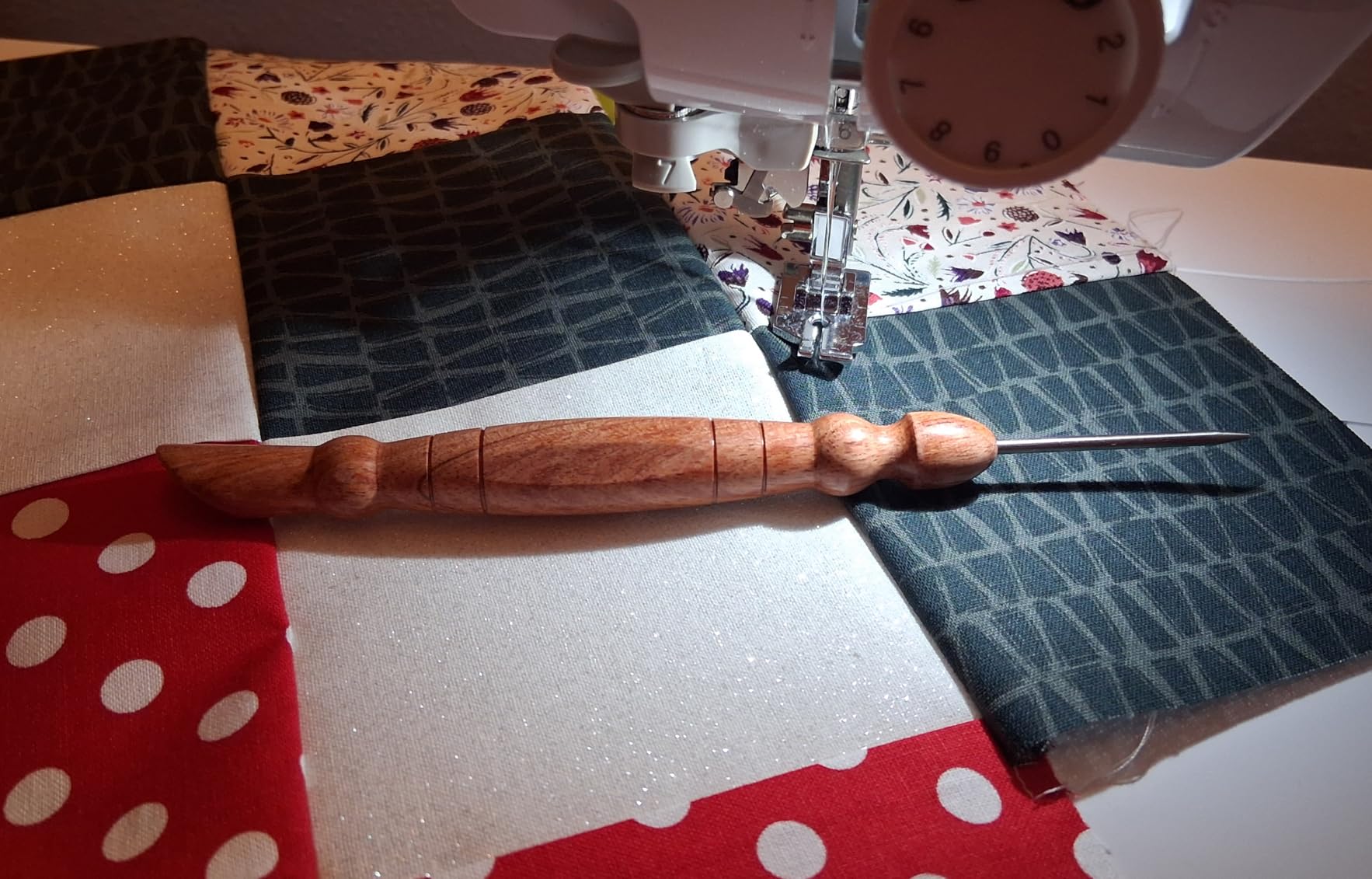
Beyond just holding fabric in place, I found myself reaching for this tool constantly. The slanted foot end works surprisingly well for pressing small seams flat while you work. When I needed to grab a thread tail to pull through or change my bobbin, the pointed tip was perfect. It replaces several single-purpose tools with one versatile instrument.
For hand quilters doing needleturn applique, the stiletto becomes an extension of your stitching hand. You use it to smooth turned edges, hold points in place while stitching, and guide fabric under the needle during any machine work. Users on quilting forums consistently mention this as one of their top three most-used tools.
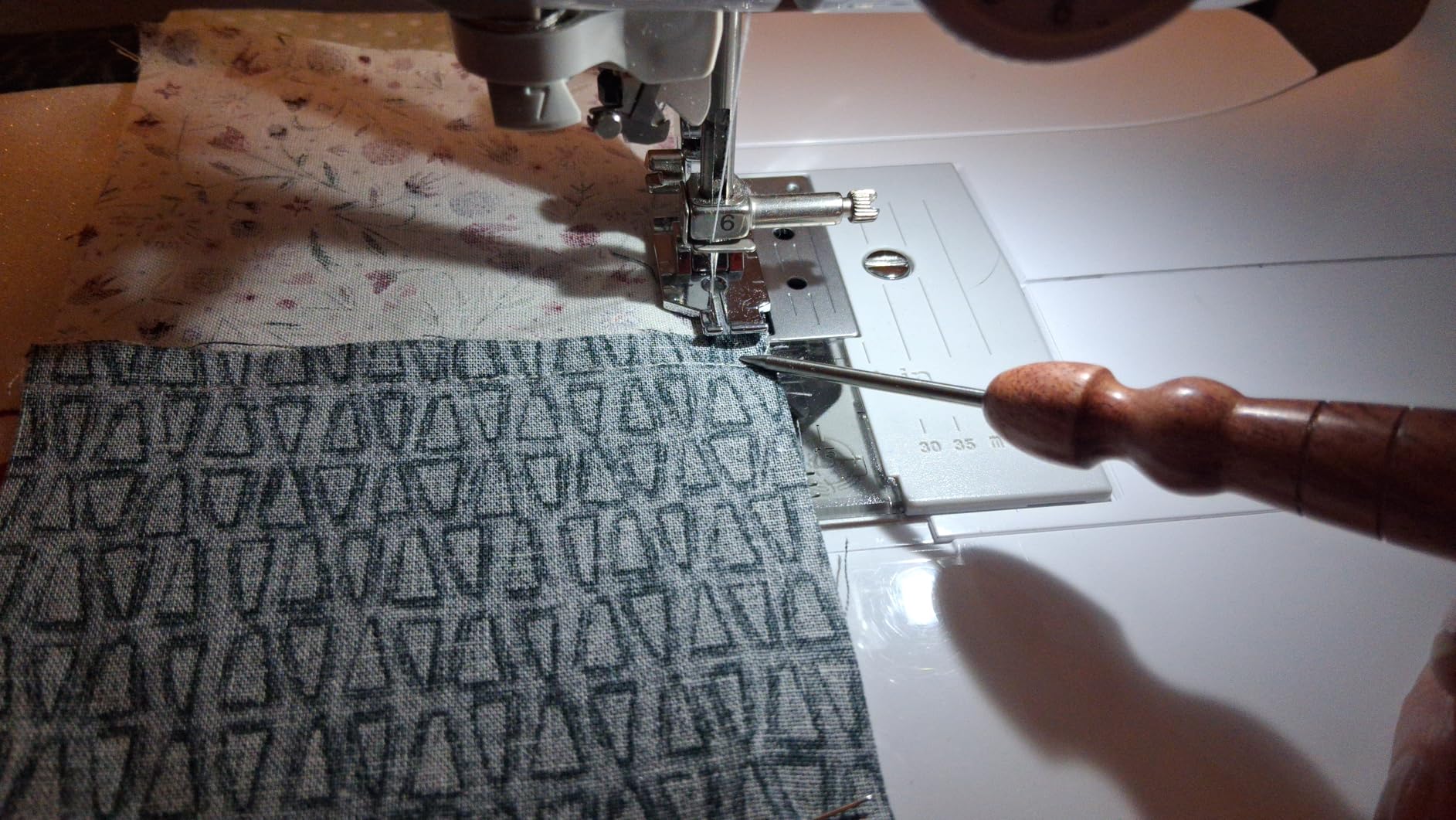
Best Uses for the Savina Stiletto
This tool shines during needleturn applique where you need to hold small seam allowances in place while stitching. It is equally useful for machine piecing when you want to guide fabric precisely without getting fingers near the needle. I also use it for pulling papers out of English Paper Piecing projects and for removing basting stitches without snagging fabric.
The pressing foot end is handy for small seams and hems where getting out a full iron is impractical. I keep mine right next to my stitching chair and reach for it dozens of times per session.
Durability and Long-Term Performance
After weeks of regular use, the stainless steel tip shows zero signs of bending or dulling. The hardwood handle has a smooth finish that has not splintered or cracked. The only minor issue is that on a perfectly flat, smooth surface, it can still roll a bit despite the flatter profile. Storing it in the included tube solves this completely.
The construction quality rivals stiletto tools costing two or three times as much. For hand quilters who want a reliable precision tool without spending a lot, this is hard to beat.
3. Clover 490/NV Hera Marker – No-Ink Marking Tool
Clover 490/NV Hera Marker
Plastic Construction
7.38 x 1.75 x 0.25 in
Crease Marking
Steam Removable
Refillable
Pros
- No ink or chalk residue
- Lines disappear with steam
- Works on all fabric types
- Refillable design
- Compact and easy to store
Cons
- Smaller than some quilters expect
- Requires firm pressure for clear marks
The Clover Hera Marker completely changed how I mark my applique placement lines. Instead of using chalk, pens, or pencils that can stain or permanently mark fabric, this tool creates a crease line by pressing on the fabric. The crease is visible enough to guide your stitching but disappears completely when you steam the fabric later.
I tested it on cotton, linen, and silk fabric, and it worked clearly on all three. The key is using consistent, firm pressure while running the tool along a ruler edge. On lighter fabrics, the crease shows up beautifully. On darker fabrics, you may need to angle your work under good light to see the lines, but they are definitely there and usable.
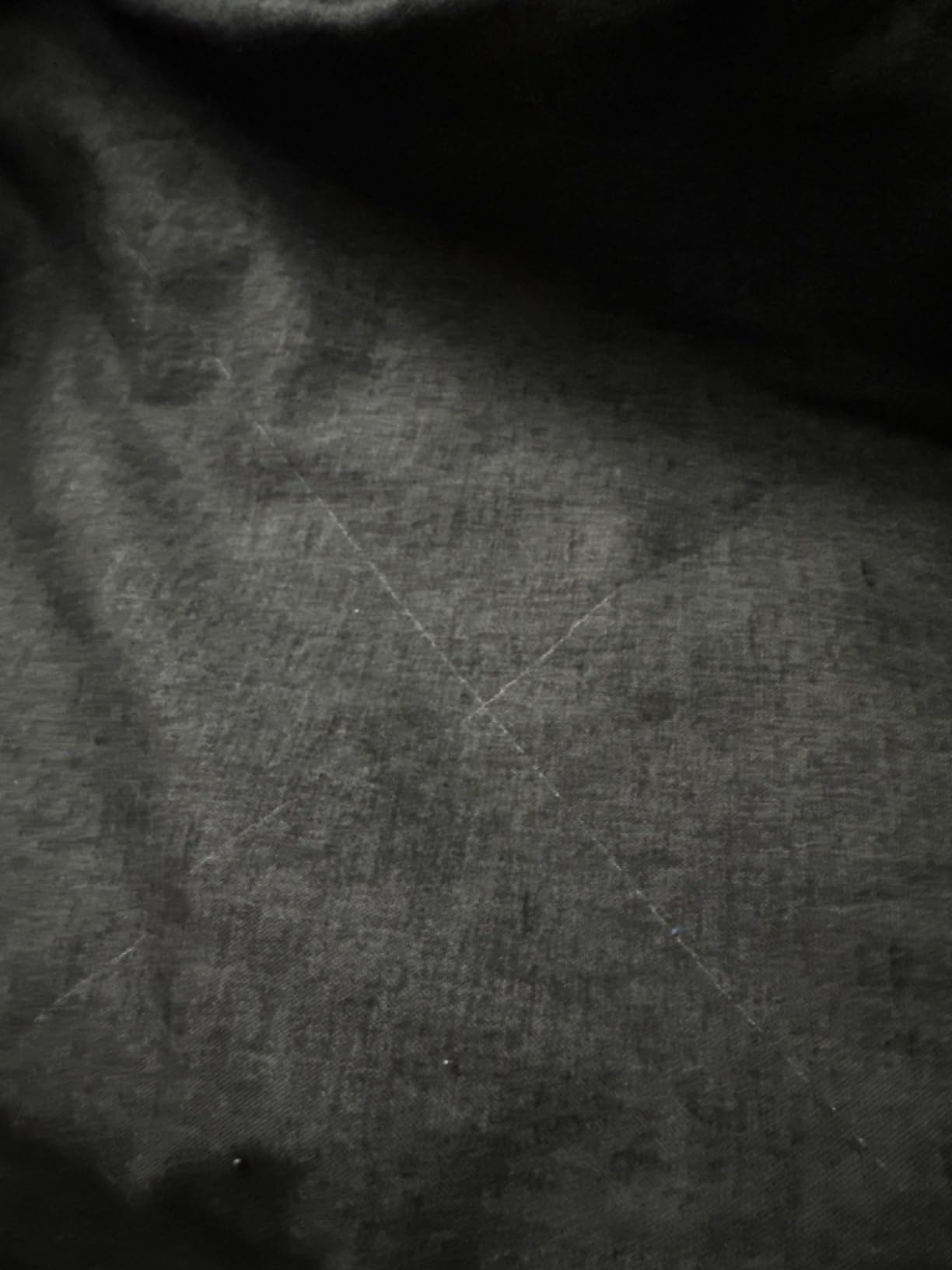
With over 2,200 reviews and a 4.7 rating, this is one of the most popular marking tools in quilting. I understand why. There is zero risk of ruining your fabric with permanent marks, which is a huge relief when you are working on an expensive quilt top. The lines stay visible as long as you need them and vanish when you are ready.
The tool is refillable, which extends its life considerably. It is small enough to fit in any sewing kit or project bag, making it perfect for taking to quilting classes or retreats. I now reach for this before any marking pencil or pen.
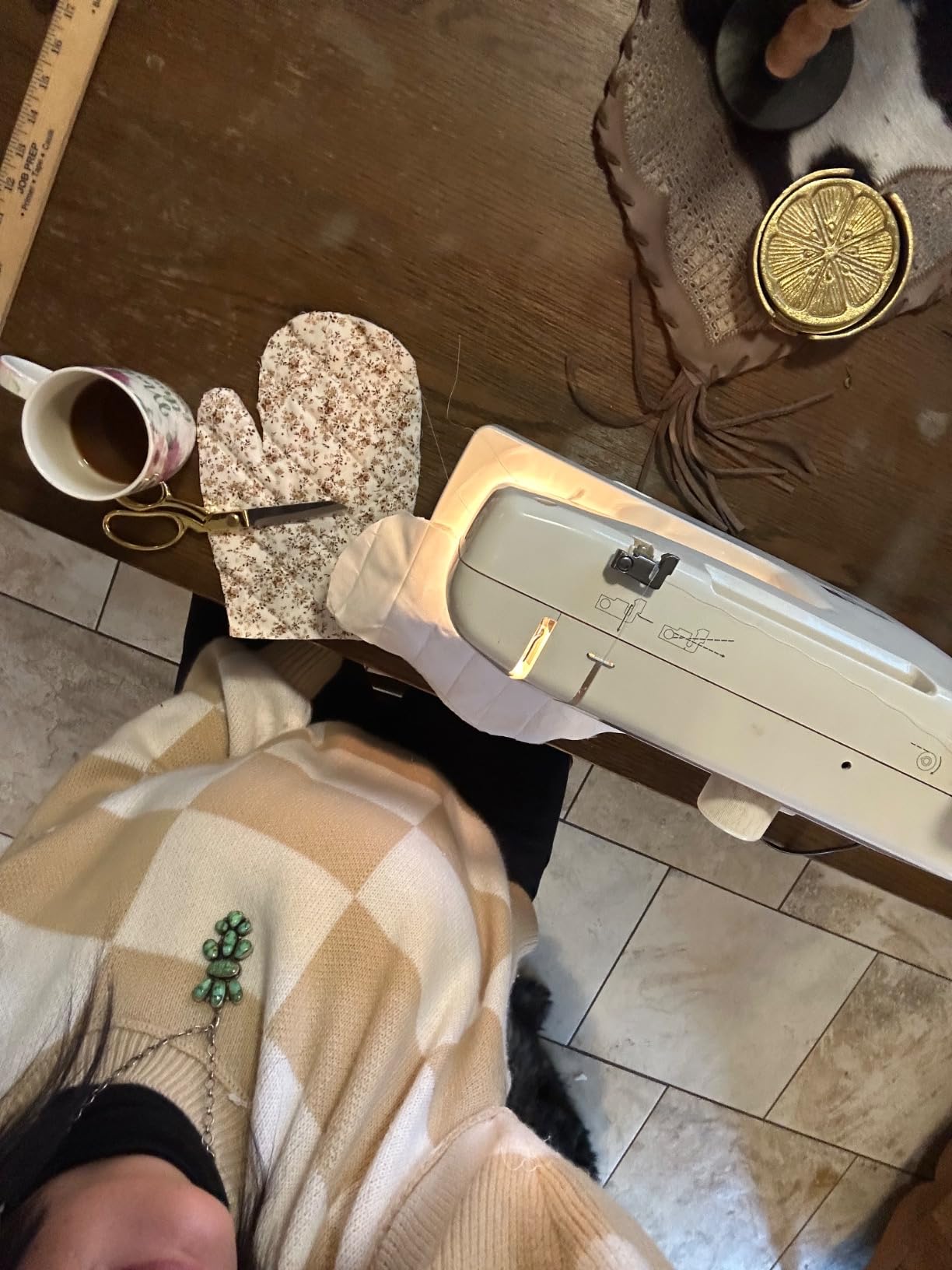
How the Hera Marker Works on Different Fabrics
The Hera Marker performs best on tightly woven cotton quilting fabric, which is what most of us use for applique. The crease lines appear crisp and clear on quilting cotton. On looser weaves like some linens, you may need slightly more pressure, and the line will be a bit softer. It does not work well on very thick fabrics or batting, so use it on your top fabric before layering.
For dark fabrics where creases are harder to see, try marking under a bright Ott light at an angle. The shadow created by the crease becomes much more visible. Some quilters mark from the wrong side of the fabric for better visibility on dark pieces.
Marking Tips for Applique Placement
Use a clear acrylic ruler as a straightedge guide when marking placement lines. The Hera Marker fits neatly against ruler edges for perfectly straight reference lines. For curved applique shapes, you can trace around templates freehand with moderate pressure. Always test on a scrap piece first to make sure the crease shows well enough on your chosen fabric.
I recommend marking only the areas you plan to stitch in your current session. While the creases do last, they can become less visible over time with fabric handling. Mark as you go for the best results.
4. Savina Quilting Seam Roller – Press Without an Iron

Savina Quilting Seam Roller, Wooden Pressing Roller, Easy to...
Hardwood Construction
6.89 x 1.65 x 1.38 in
4.2 oz
Easy Grip Handle
No Iron Needed
Pros
- Presses seams without iron
- Beautiful wood finish
- Comfortable grip handle
- Works for quilting and wallpaper
- Cleans easily even with glue
Cons
- Some prefer finger pressing for very small seams
The Savina Seam Roller is one of those surprisingly useful tools that earns a permanent spot in my applique kit. It presses seam allowances flat using just the pressure of the wooden roller, no iron needed. This is incredibly convenient when you are doing hand applique at your chair and do not want to get up to press every seam at the ironing board.
The hardwood construction feels solid and smooth in the hand. The grip handle is shaped well for extended use, and the roller itself creates a visible crease on seams and hems that holds well. I tested it on seam allowances from quarter-inch to half-inch, and it produced crisp, flat results on all of them.
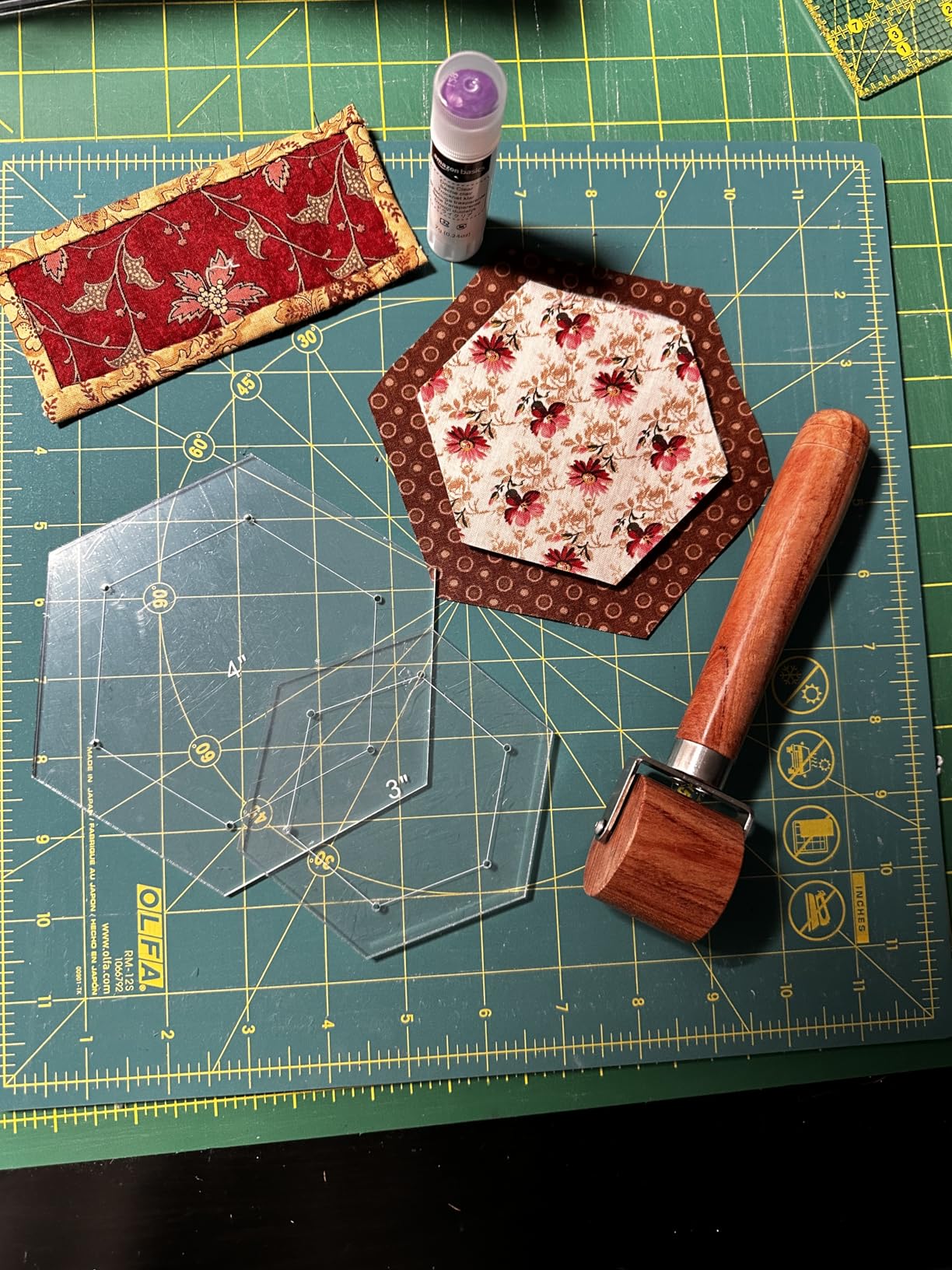
For hand applique specifically, I use this roller to press the seam allowances under on my prepped edge pieces before stitching. It works beautifully on starched fabric, creating a sharp crease that holds the turned edge in place. The roller is also handy during paper piecing and regular quilt block assembly when you want to quickly press a seam without switching to the iron.
With nearly 1,000 reviews and a 4.8 rating, the feedback from other quilters confirms my experience. It is affordable, well-made, and genuinely useful. This would make a great gift for a quilter who seems to have everything.
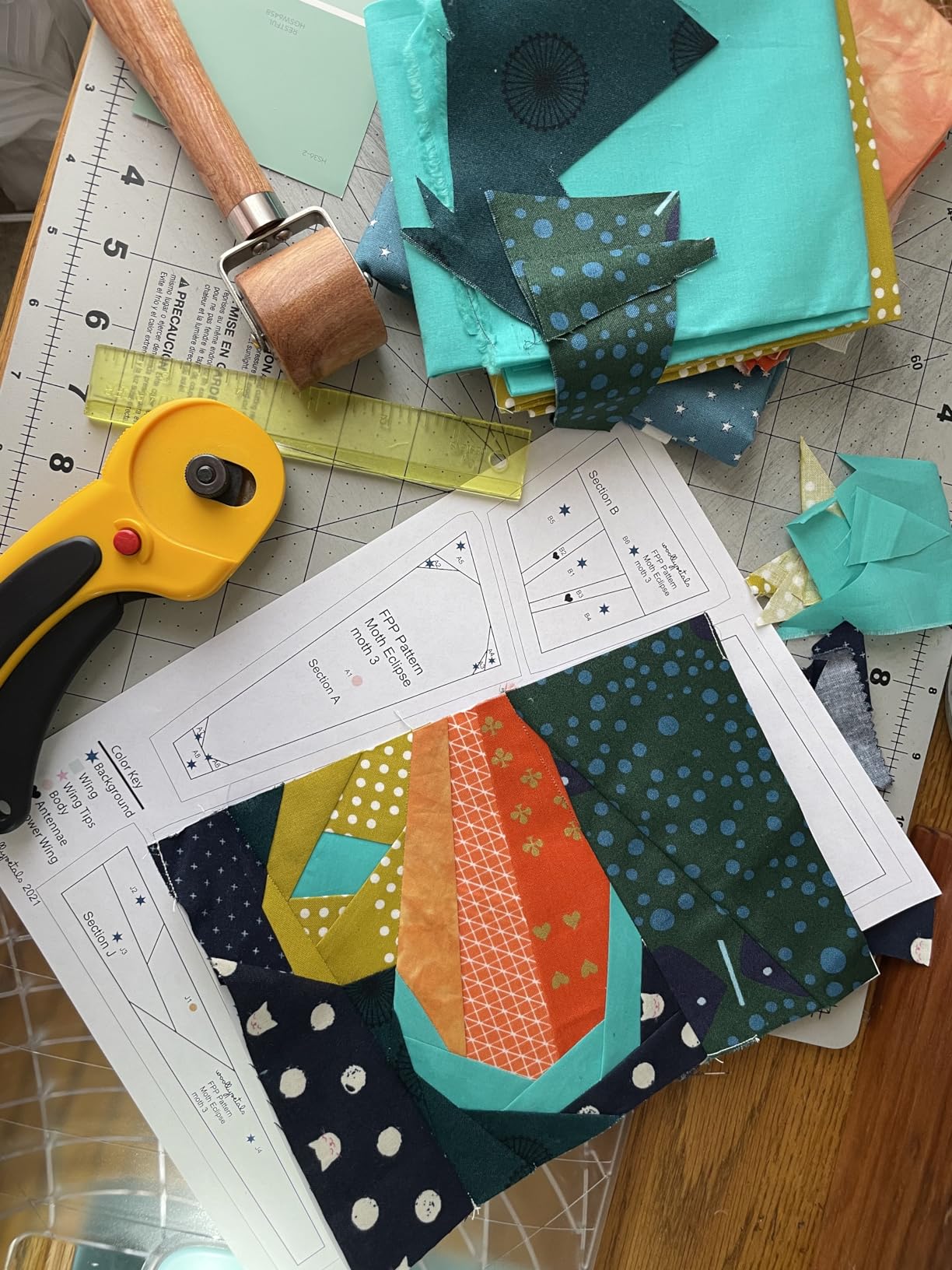
When to Use a Seam Roller vs an Iron
The seam roller excels for small, quick pressing tasks where setting up an iron is overkill. Use it during hand applique sessions to press turned edges, during piecing to flatten seams between blocks, or when traveling and an iron is not available. It does not replace an iron for larger projects or when you need heat-set creases, but for room-temperature pressing, it does an impressive job.
I reach for the seam roller about 70 percent of the time during hand applique work and only go to the iron for final pressing. It saves significant time and keeps me in my stitching flow.
Portability for Quilting on the Go
This seam roller is compact enough to toss in any project bag. I bring it to quilting classes, retreats, and even use it during long car rides when hand stitching. Since it requires no electricity or heat source, it works anywhere. The wooden construction is durable enough to handle being packed alongside scissors, needles, and other tools without damage.
5. Fiskars Micro-Tip Spring Assisted Scissors – Precision Cutting

Fiskars Micro-Tip Spring Assisted Scissors, Precision...
2-Inch Stainless Steel Blades
6.06 x 1.76 in
Micro-Tip
Spring Assisted
Lifetime Warranty
Pros
- Micro-tip cuts to the very point
- Spring action reduces hand fatigue
- SoftGrip handle for comfort
- Cuts all fabric types
- Lifetime warranty
Cons
- Can attract lint from fabric
- May not hold up to very heavy extended use
Cutting out applique shapes requires scissors that can handle tight curves and tiny details without fraying the fabric. The Fiskars Micro-Tip scissors are the number one selling craft shears on the market, and after testing them on intricate applique templates, I see why. The micro-tip blades come to an ultra-fine point that lets you cut all the way to the tip of the blade with complete control.
The spring-assisted mechanism is the standout feature for hand quilters. When you are cutting out dozens of small applique pieces, your hand gets tired quickly with regular scissors. The spring gently opens the blades after each cut, which dramatically reduces finger fatigue during long cutting sessions. I cut out 40 leaf shapes in one sitting without any hand cramping.
The precision-ground stainless steel blades stay sharp through many projects. I tested them on cotton, silk, felt, and polyester, and they handled all of them cleanly. The SoftGrip handle adds another layer of comfort, and the thumb lock keeps them safely closed when not in use.
Precision Cutting for Intricate Applique Shapes
These scissors truly excel on curves and tight corners. The short 2-inch blades give you maximum control for navigating the small radius curves common in applique designs like flower petals, leaves, and scrollwork. I found I could cut much closer to my marked lines with these than with standard scissors, which saves fabric and reduces trimming time later.
For raw edge applique, clean cuts are critical because the cut edge is visible in the finished piece. The micro-tip produces crisp edges with minimal fraying on cotton quilting fabric. If you fuse your fabric to fusible web before cutting, these scissors glide through both layers effortlessly.
Hand Fatigue and Extended Use Comfort
The spring-assisted action means you only need to squeeze to cut, not repeatedly open and close your hand. This makes a real difference when cutting many small pieces. The SoftGrip coating on the handles prevents slipping and reduces pressure points. Users with arthritis or hand weakness particularly benefit from this design. The thumb lock is a nice safety touch that also lets you store them without the spring pushing the blades open.
6. John James Quilting/Betweens Hand Needles – Size 3/9
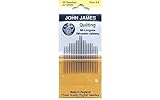
John James Quilting/Betweens Hnd Ndls-Size 3/9 20/Pkg
Size 3/9 Betweens
20 Needles
Nickel Plated Iron
1.5 in Length
Sharp Point
Pros
- Nickel plated for durability
- Hold shape without bending
- Easy to thread
- Perfect sharpness for quilting
- Great for hand quilting and binding
Cons
- Size may be too small for some preferences
Needles are arguably the most personal tool choice for any hand quilter, and John James betweens have been a trusted name for generations. This assortment includes sizes 3 through 9, giving you a range of options to find what works best for your hands and your thread. I tested the full range over several projects and found sizes 7 and 8 to be my sweet spot for hand applique with 50-weight cotton thread.
The nickel-plated iron construction gives these needles a smooth surface that glides through fabric without catching. What impressed me most is how well they resist bending. Cheaper needles tend to develop a bow after extended use, especially when pulling through multiple layers. These John James needles stayed straight through hours of stitching.
The sharp point pierces fabric cleanly without leaving visible holes, which is essential for the nearly invisible stitches that define good hand applique. At this price for 20 needles, they are an exceptional value and one of the first tools I would recommend to anyone building an applique toolkit.
Understanding Needle Sizes for Hand Applique
Betweens, also called quilting needles, are shorter and finer than sharps. The higher the number, the shorter and thinner the needle. For hand applique, most quilters prefer sizes 9 through 12 for the finest stitches, but if you have trouble threading tiny eyes or prefer a needle with more body to grip, sizes 7 and 8 from this set are excellent choices.
The size 3 needles in this set are quite robust and work better for basting layers together than for fine applique stitching. Start with the middle sizes and experiment to find what gives you the best combination of comfort and stitch quality.
Thread Compatibility and Threading Ease
Forum discussions reveal that many quilters struggle with threading smaller needles, especially with aging eyes. The good news is that these John James needles have consistent, smoothly finished eyes that accept standard quilting thread without fighting. For sizes 9 and above, a basic needle threader works perfectly. Sizes 7 and 8 are easy enough to thread by hand with most 50-weight and 60-weight cotton threads.
I recommend pairing these with a good quality thread conditioner like beeswax to reduce tangling. The combination of smooth needles and conditioned thread makes for much more pleasant stitching sessions with fewer frustrating tangles.
7. Dritz 636 Point Turner & Seam Creaser – Multi-Purpose Helper

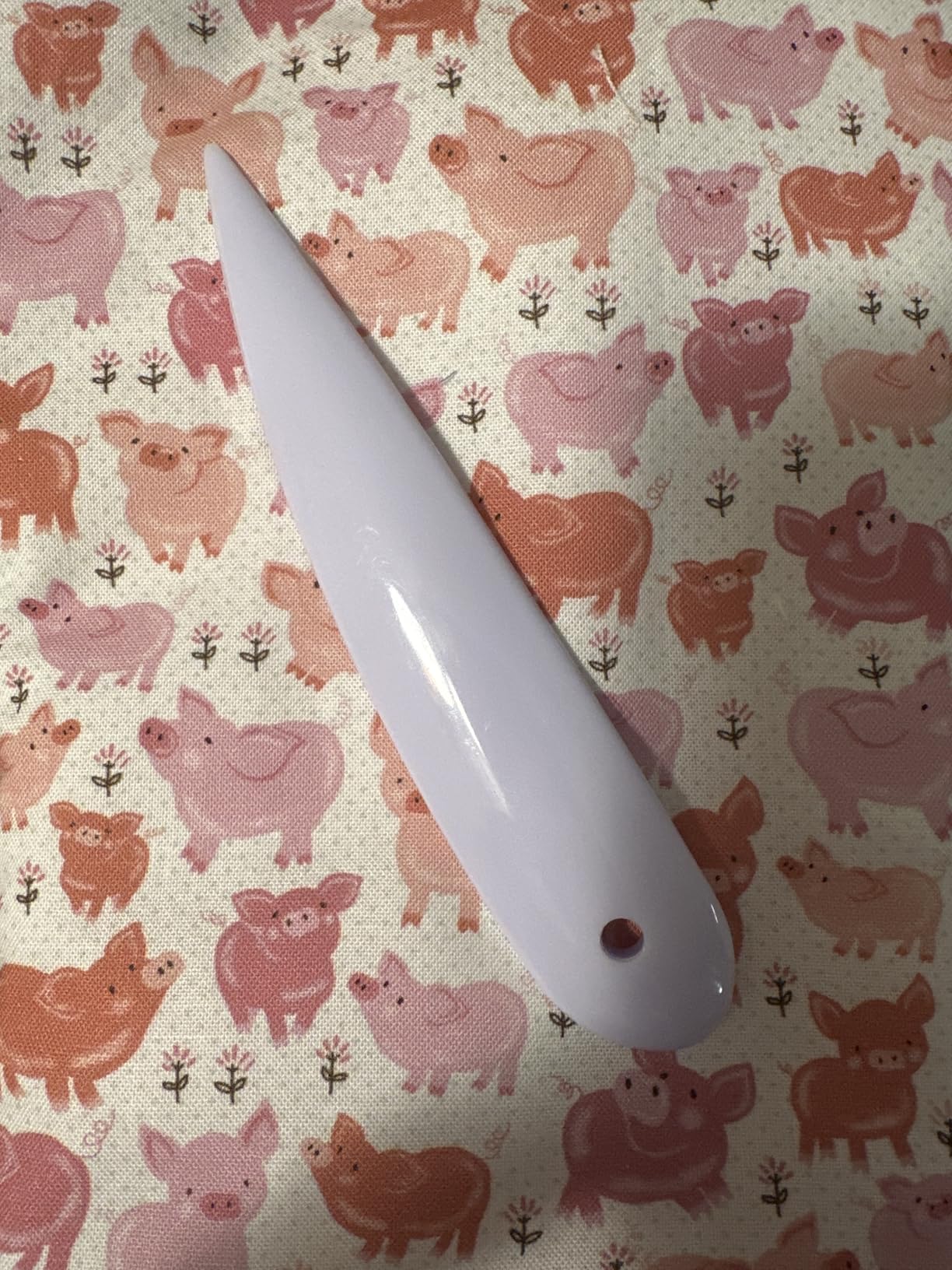
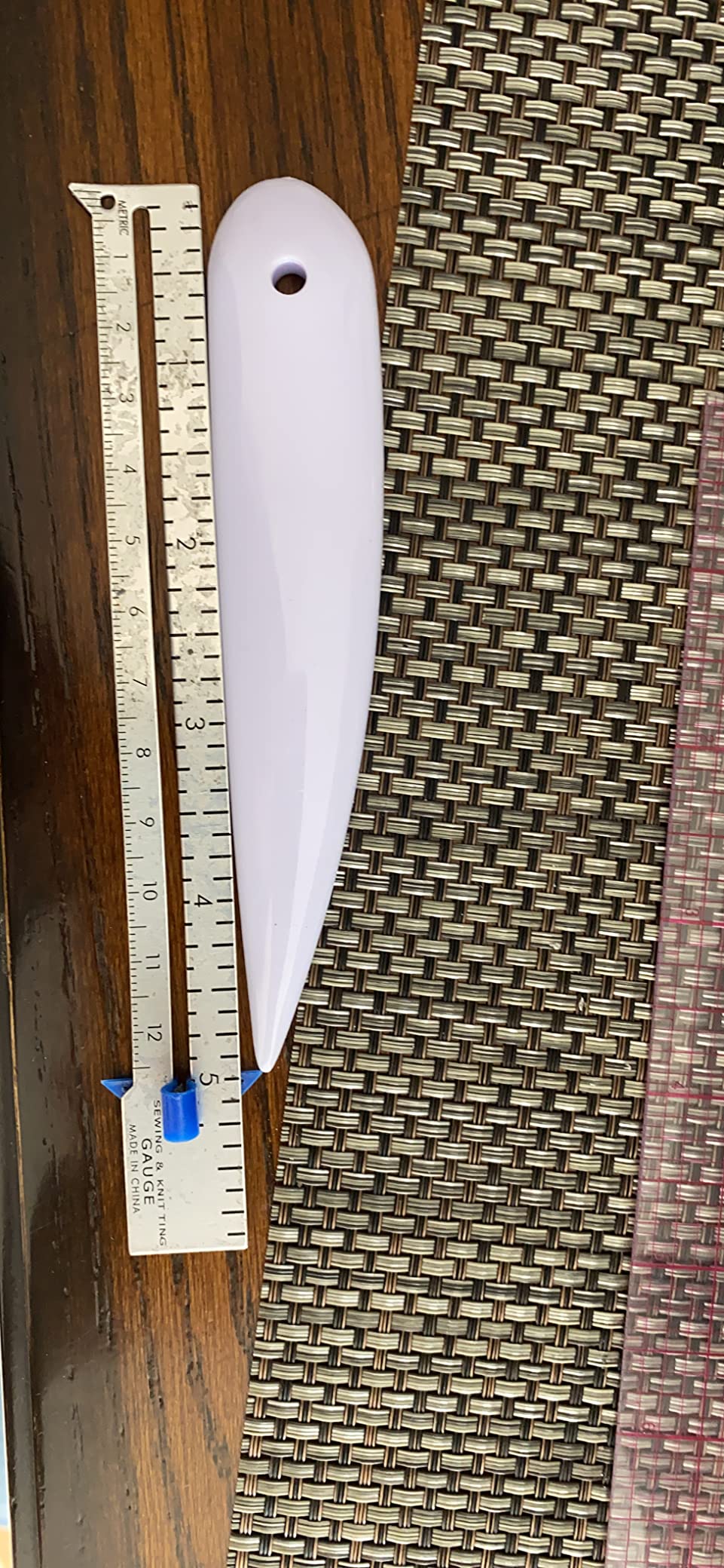
Dritz 636 Point Turner & Seam Creaser , White
Bamboo Construction
6.7 x 2.9 in
Lightweight
Point Turner & Seam Creaser
Pros
- Perfect for turning corners and points
- Creases seams effectively
- Durable bamboo build
- Lightweight and comfortable
- Removes basting stitches easily
Cons
- Can poke through thin fabric if pressed too hard
The Dritz Point Turner is one of those inexpensive tools that surprises you with how often you reach for it. At its core, it does two things well: turns corners and creases seams. But in practice, I found myself using it for much more during my applique projects. The pointed end is perfect for gently pushing out the corners of turned applique shapes, and the rounded end creases seam allowances cleanly.
The bamboo construction is lightweight and has a warm, natural feel in the hand. It is smooth enough that it will not snag fabric, even delicate silks. I used it to turn the points on several star-shaped applique pieces, and it created crisp, clean corners without any of the fabric distortion you sometimes get when using a pin or scissors tip.
For hand quilters specifically, the seam creaser end is useful for pressing under seam allowances on prepped edge applique. Run it along the edge of a template or ruler, and you get a clean fold line without heat. It also works well for removing basting stitches. The pointed end slides under stitches and lifts them away without catching the applique fabric underneath.
With nearly 1,500 reviews and a 4.8 rating, this tool has earned its reputation. It is simple, affordable, and genuinely useful. Every quilter I know who has one keeps it within arm’s reach while stitching.
Turning Points and Corners in Applique
Sharp points are one of the trickiest parts of hand applique. When you turn the seam allowance under on a point, there is a tendency for fabric to bunch or the point to come out rounded instead of sharp. The Dritz Point Turner solves this by letting you gently push the fabric into the point from the inside. Use light pressure and work slowly for the crispest results.
I also use the flat edge of the tool to press the seam allowances along straight edges of my applique shapes. It creates a firm crease that holds well during stitching, especially on starched fabric.
Multi-Purpose Uses Beyond Quilting
This tool is not limited to quilting. I have used it for origami, paper folding, and even bookbinding. It works as a general-purpose creasing and scoring tool for any craft involving folding. For sewists, it is equally useful for garment construction, where turning collar points and creasing hemlines are constant tasks. At this price, grab one for your quilting kit and another for your general sewing space.
8. Bohin Applique Needles Size 11 – French Precision
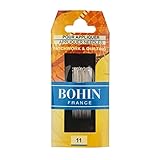
Bohin Applique Needles, Size 11, 20-Pack
Size 11 Sharps
20 Needles
Nickel-Plated Steel
Made in France
0.91 in Length
Pros
- Exceptionally sharp and smooth
- Glides through multiple layers
- Premium French manufacturing
- Ideal for needle turn applique
- Will not bend during use
Cons
- Small eye can be difficult to thread
- Eyes may be too small for thicker threads
Bohin has been making needles in France since 1822, and their applique needles in size 11 represent the pinnacle of hand stitching precision. These are the needles that experienced needle turn applique artists reach for when they want stitches that truly disappear into the fabric. After testing them alongside several other brands, the difference in smoothness and sharpness is noticeable.
The nickel-plated steel construction produces a needle with an incredibly smooth surface that passes through fabric like butter. Even when stitching through multiple layers of cotton and fusible web, these needles glide without resistance. The sharp point creates the tiniest possible puncture in the fabric, which is what makes those invisible applique stitches possible.
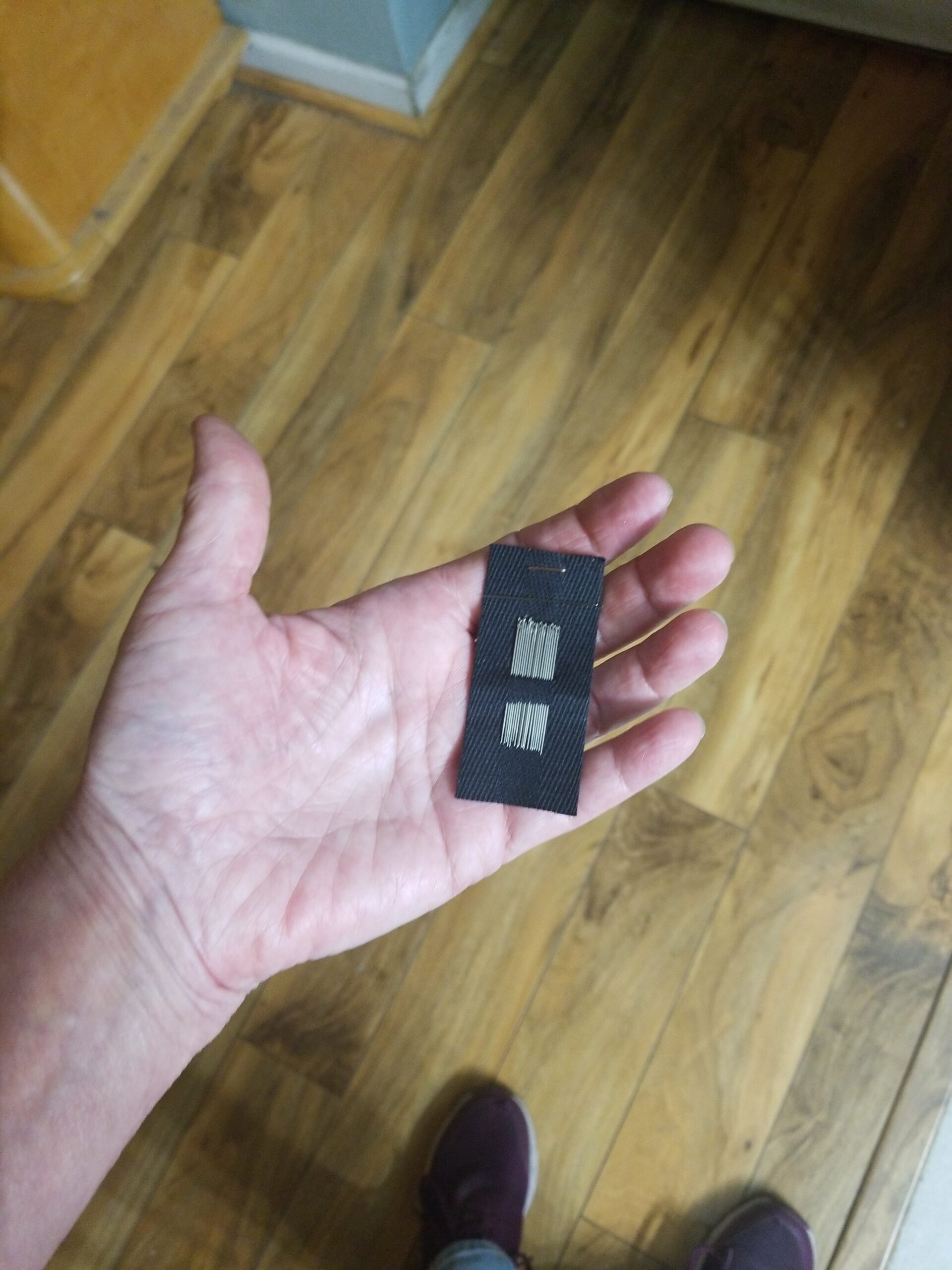
Size 11 is a popular choice for experienced hand applique artists because the short, fine needle produces the smallest stitches. However, the trade-off is a very small eye. If you have difficulty seeing to thread needles, or if you prefer using 50-weight thread instead of finer weights, you may want to consider size 10 instead. A needle threader is almost mandatory with these size 11 needles.
For bead embroidery and English Paper Piecing, these needles are equally impressive. They do not bend or develop hooks at the tip even after extensive use. The quality control is evident in every needle in the pack.
Bohin vs Other Needle Brands for Needle Turn Applique
Compared to John James and Tulip needles, Bohin needles sit in the premium tier. They are sharper than John James out of the package and have a smoother finish that reduces drag through fabric. Tulip needles from Japan are comparable in quality but tend to be more expensive. The main advantage of Bohin is consistency. Every needle in the pack performs exactly the same, which is not always the case with other brands.
For needle turn applique specifically, the combination of sharpness and smoothness means you can pick up fewer threads of background fabric with each stitch, resulting in stitches that are nearly invisible.
Thread Weight Recommendations for Size 11 Needles
Size 11 needles work best with 80-weight to 100-weight thread. Silk thread in these weights is ideal for invisible applique stitches. If you prefer cotton, look for 80-weight or 100-weight options from brands like Superior Threads or Presencia. Using 50-weight thread with these needles will be a struggle because the eye is simply too small. Match your thread weight to your needle size for the best stitching experience.
9. Kai 5130DC Double Curved Embroidery Scissors – Reaching Tight Spaces
Kai 5130DC: 5-inch Double Curved Scissors
1.25in Vanadium Steel Blades
4.75 x 2.25 in
0.7 oz
Double Curved
Polished Finish
Pros
- Sharp right to the very tip
- Double curve reaches tight spaces
- Lightweight with excellent control
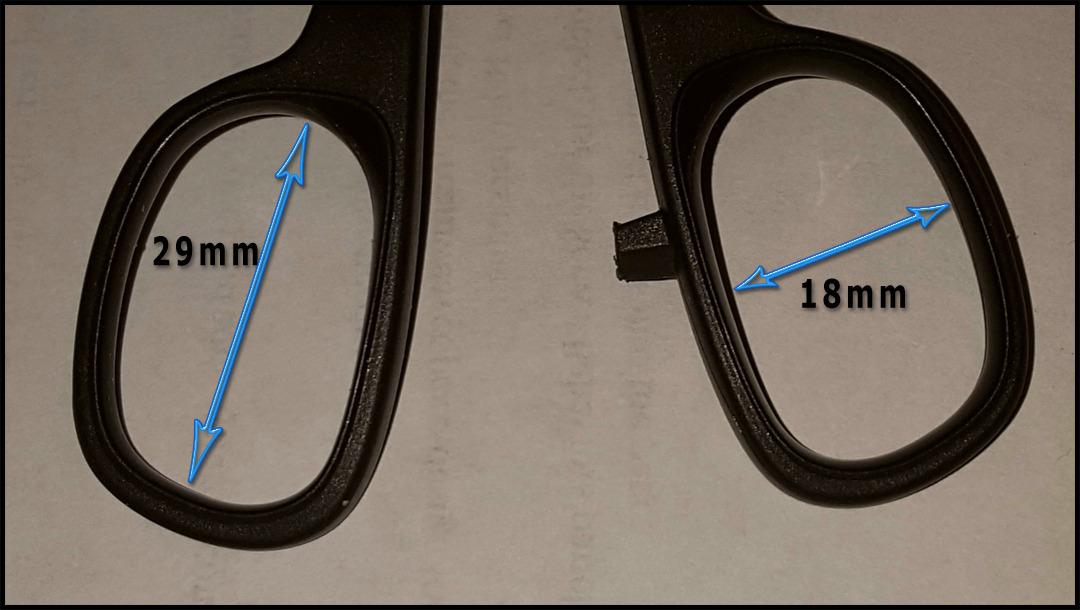
- Ambidextrous design
- Resists rust and corrosion
Cons
- Tip may feel slightly dull for some users
- Plastic cover can break during shipping
The Kai double curved scissors are specifically designed for situations where straight scissors simply cannot reach. The double curve in the blades lets you trim threads and clip fabric in tight spaces while keeping your hand above your work. For hand applique, this means you can trim seam allowances and clip curves from the top of your work without flipping it over or distorting your placement.
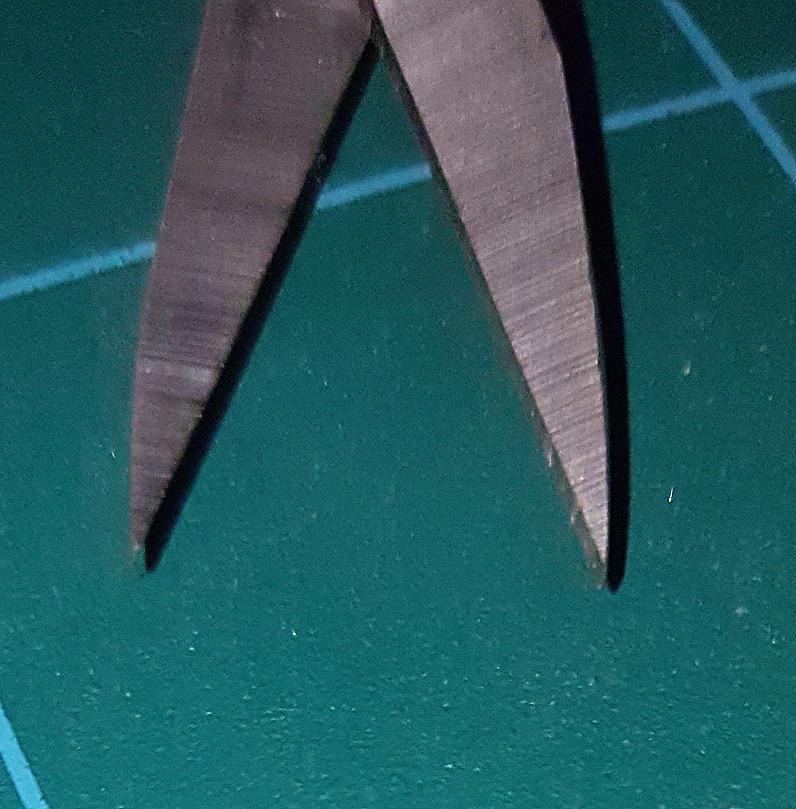
The vanadium-infused stainless steel blades hold their edge remarkably well. After weeks of cutting cotton fabric and thread, mine are still razor sharp to the very tip. The 1.25-inch blade length is perfect for the detailed, small-scale cutting that applique demands. Longer blades would be harder to control in tight applique areas.
I found these scissors especially useful for trimming jump stitches and stray threads on the surface of applique pieces after stitching them down. The curved blade design lets you get flush against the fabric surface without accidentally snipping into your applique shape. This is something straight scissors simply cannot do safely.
The lightweight design at just 0.7 ounces means your hand does not tire during extended trimming sessions. The polished finish is not just aesthetic. It helps resist the adhesive residue that builds up when cutting fusible web-backed fabrics, which is a constant issue with applique work.
Reaching Tight Spaces in Applique Work
The double curve is the key feature here. The first curve lifts your hand above the work surface, while the second curve angles the blade tip down toward the fabric. This lets you see exactly what you are cutting while maintaining clearance for your fingers. For machine embroidery with applique, these are the go-to scissors for trimming fabric close to the stitching line.
For hand applique, I use them to clip inner curves on concave shapes before turning the seam allowance. The curved tip reaches into the curve and makes a precise clip without cutting past the seam line.
Maintenance and Blade Care
Keep these scissors clean by wiping the blades with a soft cloth after each use, especially when cutting fusible web. The adhesive residue can build up and affect cutting performance over time. A drop of sewing machine oil on the pivot screw every few months keeps the action smooth. Store them in the included cover or a dedicated scissors case to protect the tips from damage.
10. Karen Kay Buckley Perfect Scissors – Micro-Serrated Precision

Karen Kay Buckley® Perfect Scissors™, Small 3-3/4 Inch...
3-3/4in Overall Length
7/8in Micro-Serrated Blade
Alloy Steel
Red Comfort Handle
Ambidextrous
Pros
- Micro-serrated blade grips thread instead of pushing it
- Extremely sharp to the point
- Adjustable screw for tension
- Works for right and left hands
- Protective cover included
Cons
- Premium price point
- Tips are extremely sharp and require careful handling
Karen Kay Buckley Perfect Scissors have a loyal following in the quilting community, and after testing the small 3-3/4 inch version, I understand the devotion. The micro-serrated blade is what sets these apart from every other scissors on the market. Instead of pushing thread away from the blade as you close it, the serrated edge grips the thread and cuts it cleanly every time.
This gripping action is a major advantage when snipping threads close to your applique work. With regular scissors, there is always a risk of the thread sliding away from the blade before the cut is complete. These scissors grab and cut in one motion. I tested them on single strands of 100-weight silk thread and they cut cleanly every single time.
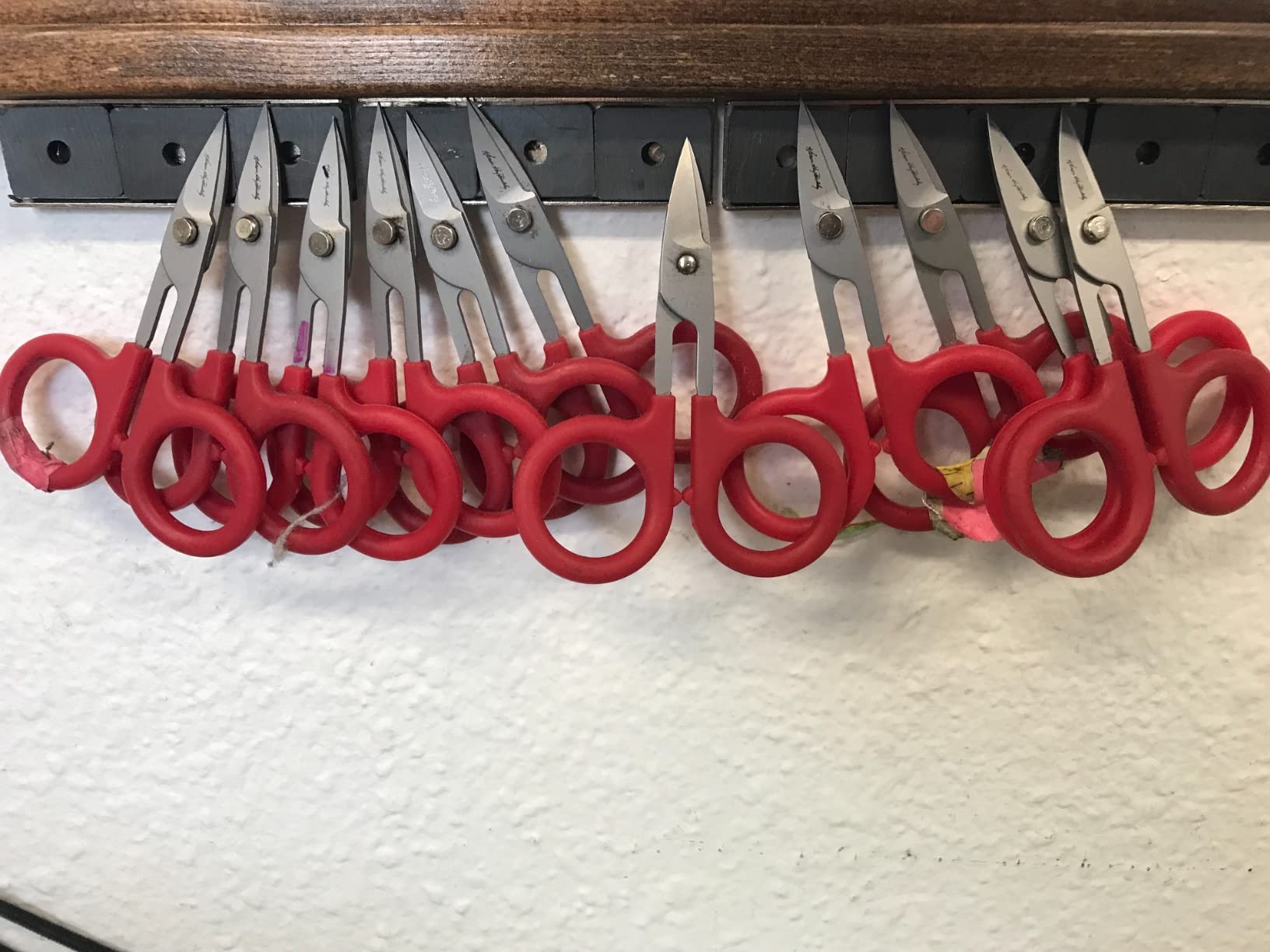
The red comfort handle is designed for both right and left-handed use, which is a thoughtful touch. The handles have a soft, ergonomic shape that feels good during extended use. An adjustable screw lets you modify the blade tension to your preference, something most scissors do not offer. The small overall size makes these perfect for keeping right next to your stitching chair.
These are professional-quality scissors that justify their premium price. If you do a lot of hand applique and thread snipping is a constant part of your workflow, the micro-serrated blades will save you time and frustration. The protective cover is a nice inclusion for safe storage.
Why Micro-Serrated Blades Make a Difference
Standard scissors have smooth blades that rely entirely on sharpness to cut. When you are trying to snip a single thread close to fabric, the thread can slip between the blades without being cut. Micro-serrated blades have tiny teeth that grip the thread, holding it in place while the blade slices through. This means fewer missed cuts and less time spent chasing runaway threads.
For machine applique, the serrated edge also helps grip fusible web and stabilizer when trimming close to stitching lines. The result is cleaner, more precise cuts with less effort.
Left-Handed and Ambidextrous Use
The symmetrical handle design works equally well in either hand. Left-handed quilters often struggle to find quality scissors that feel natural, but these Karen Kay Buckley scissors eliminate that problem. The only adjustment is the blade tension screw, which can be fine-tuned regardless of which hand you use. The 478 reviews with a 4.8 rating confirm that both right and left-handed users love these scissors equally.
11. FlexiFuse Lightweight Fusible Web – Clean Bonding for Applique

25 Sheets (8" x 10.5") - FlexiFuse Lightweight Fusible Web...
25 Sheets 8x10.5in
Lightweight Web
Paper Backed
Hand & Machine Sewable
No Needle Gumming
Pros
- Does not add bulk or stiffness
- Hand and machine sewable
- Paper backing easy to trace on
- Repositionable before final pressing
- No needle gumming when stitching
Cons
- Thicker paper can be hard to trace through
- May jam in some printers
Fusible web is the backbone of raw edge applique, and finding one that bonds securely without adding stiffness is critical. FlexiFuse delivers on this promise. These 8 by 10.5 inch sheets are lightweight enough that your applique pieces remain soft and pliable after fusing, which makes hand stitching through them much more pleasant than with heavier fusible products.
I tested these with both hand and machine stitching and experienced zero needle gumming. This is a significant advantage. Some fusible webs leave a sticky residue on your needle that builds up with each stitch, eventually causing thread breakage and frustration. FlexiFuse was specifically designed for applique, and it shows in this critical detail.
The paper backing is easy to trace patterns onto with a regular pencil or pen. I traced several complex shapes and found the lines clear and easy to follow. The 25-sheet package gives you plenty of material for multiple projects. Each sheet can accommodate several small applique shapes, so the value per project is excellent.
One feature I really appreciate is that the fusible web is repositionable before you do the final pressing. This means you can place your applique pieces on the background fabric, step back and evaluate the layout, and adjust as needed before committing. For complex designs with many overlapping pieces, this is invaluable.
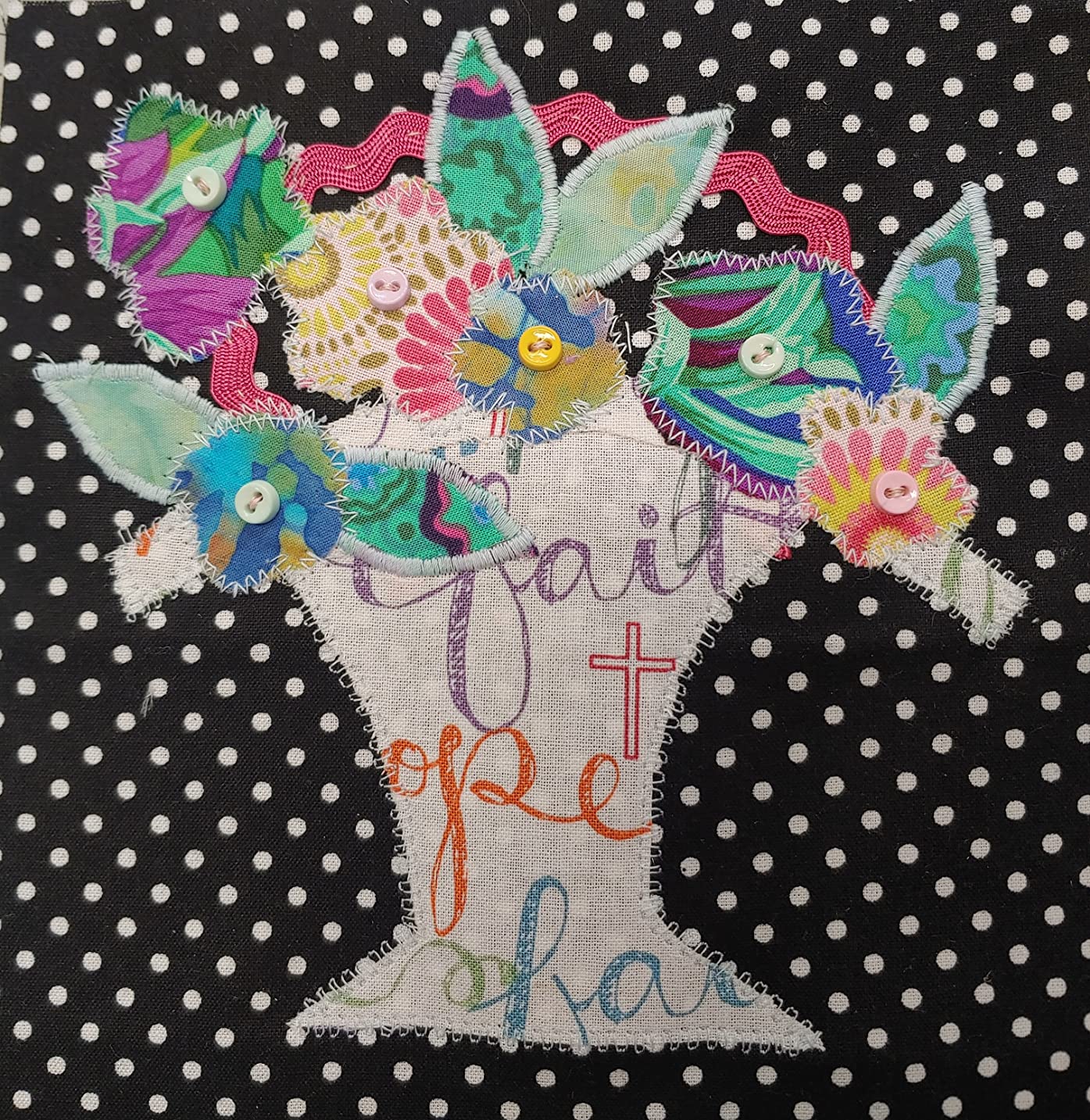
Fusible Web vs Needle Turn Applique Methods
Fusible web is used for raw edge applique, which is a different technique from needle turn or prepped edge applique. With raw edge, you fuse the fabric shape directly to the background and then stitch around the raw edge with a decorative or invisible stitch. It is faster than turning edges and works beautifully for designs where a visible edge adds to the aesthetic. Needle turn applique produces a more traditional look with turned seam allowances.
Many quilters use both methods depending on the project. FlexiFuse is an excellent choice if you want to try raw edge applique or if you use fusible web to temporarily hold pieces in place before hand stitching with a turned edge method.
Printing and Tracing Tips for Patterns
You can run these sheets through an inkjet printer to transfer digital applique patterns directly. Print on the paper backing side with your pattern reversed, then fuse to your fabric and cut. If tracing by hand, use a light box or hold the sheet against a window for better visibility. The paper backing is slightly thicker than some competitors, which makes tracing fine details a bit more challenging but also makes the sheets more durable and less likely to tear during handling.
12. Clover MCI-900 Mini Iron – Precision Pressing for Applique

Clover MCI-900 Mini Iron , White
Mini Shaped Iron Head
14 x 4.15 in
7.5 oz
Stand Included
Two Heat Settings
120V
Pros
- Gets hot very quickly
- Mini head fits tight spaces
- Lightweight and easy to control
- Long power cord
- Stand included for safety
Cons
- No automatic shut off
- US voltage only 120V
- Cord weight can shift the iron
A mini iron is essential for hand applique because you need to press small, shaped pieces without disturbing the surrounding work. The Clover MCI-900 has been the go-to mini iron for quilters for years, and with over 4,400 reviews, it has a proven track record. The small, pointed iron head reaches into tight curves and corners that a full-size iron cannot access.
I tested it for pressing seam allowances on prepped edge applique pieces and for fusing small applique shapes with fusible web. The mini head is perfect for these tasks. It heats up quickly, produces consistent heat, and the pointed shape lets you press right up to the edge of a seam allowance without flattening adjacent areas.
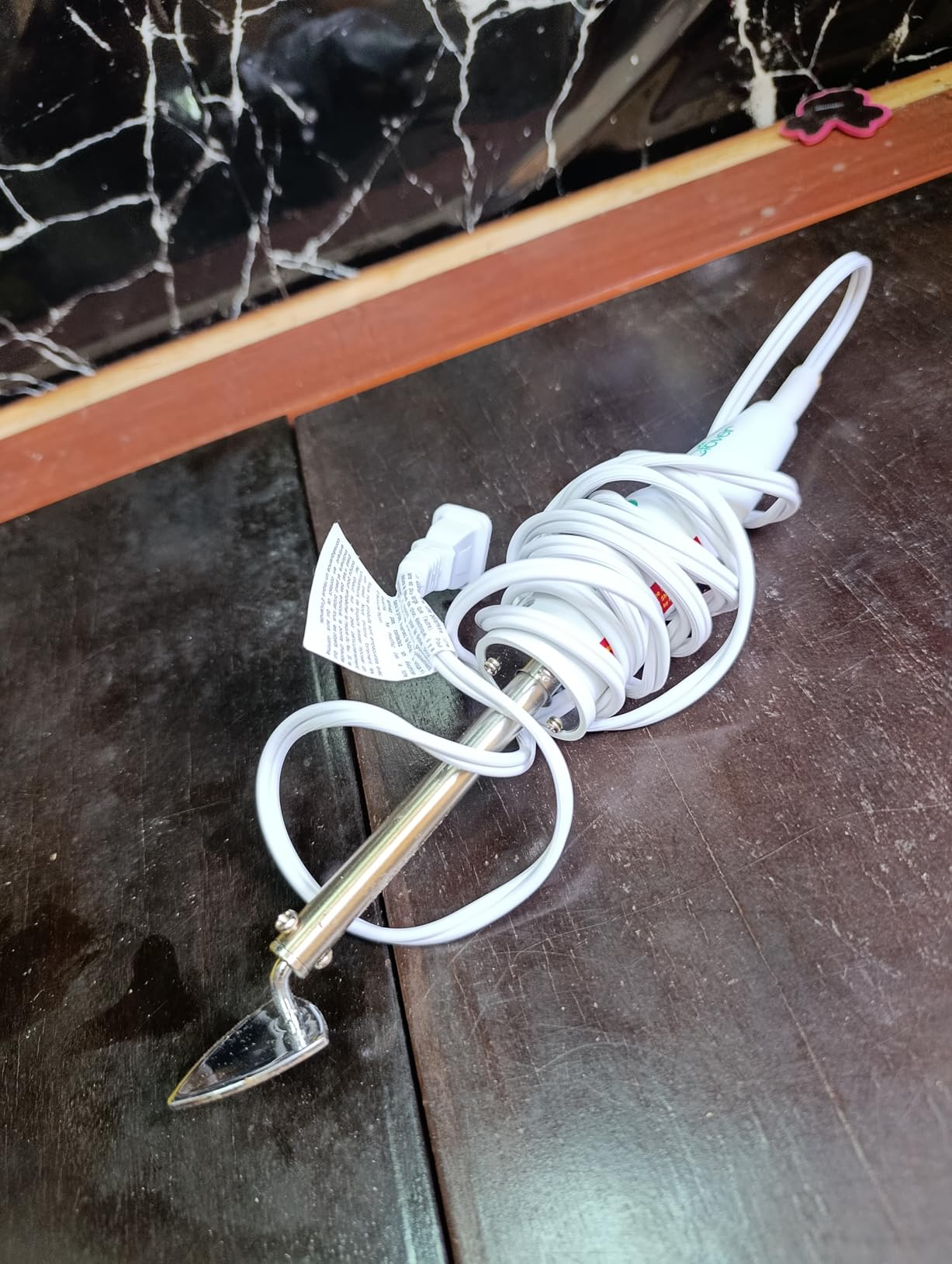
The lightweight design at 7.5 ounces gives you excellent control during detailed pressing. A full-size iron is cumbersome when you are pressing a 2-inch flower petal. The Clover Mini Iron lets you work with precision, pressing exactly where you need to without disturbing your carefully positioned pieces. The included stand with rubber feet keeps the hot iron safely off your work surface.
Two temperature settings give you flexibility for different fabric types. Use the lower setting for delicate fabrics like silk and the higher setting for cotton. The long power cord is a practical touch that gives you freedom to move around your pressing station.
Mini Iron vs Full-Size Iron for Applique Work
A mini iron is not a replacement for your full-size iron. It is a specialized tool that excels at small-scale pressing tasks. Use your regular iron for pressing yardage, large quilt sections, and initial fabric preparation. Switch to the mini iron for pressing individual applique pieces, setting fusible web on small shapes, and doing detail work at your quilting station. Many quilters keep a mini iron set up permanently next to their stitching chair for quick pressing during hand work.
The small head size prevents you from accidentally pressing areas you did not intend to touch. This precision is especially important when working on complex applique designs with overlapping pieces.
Heat Settings and Safety Considerations
The biggest drawback of this iron is the lack of automatic shut-off. You must remember to unplug it when you step away. This is important enough that I set a timer on my phone whenever I plug it in. The US-only 120V rating means it is not suitable for international quilters without a voltage converter. Despite these limitations, the performance for applique-specific pressing tasks is outstanding, and most quilters consider it worth the extra caution required.
How to Choose the Right Applique Tools for Hand Quilting?
Building your hand applique toolkit does not mean buying everything at once. Based on my testing and the experiences shared by quilters on forums like r/quilting and quiltingboard.com, here is a practical approach to selecting the tools that matter most for your skill level and preferred technique.
Essential Tools for Beginners
If you are just starting with hand applique, focus on four items first: quality needles, good thread, precision scissors, and a marking tool. Start with the John James betweens in a mid-range size like 7 or 8. They are affordable, easy to thread, and will help you develop your stitching technique without fighting your tools. Add a pair of Fiskars Micro-Tip scissors for cutting shapes, and a Clover Hera Marker for placement lines. These three tools alone will get you through your first several projects successfully.
As you gain confidence, add the Savina stiletto and Dritz Point Turner. These help with precision and make the physical process of turning and holding edges much easier. Think of them as tools that remove frustration from the learning process.
Needle and Thread Selection Guide
Choosing the right needle depends on your thread choice, and vice versa. For 50-weight cotton thread, use a size 8 or 9 needle. For 80-weight cotton or silk thread, move to a size 10 or 11 needle like the Bohin applique needles. The finer the thread, the smaller the needle you need, and the more invisible your stitches will be. If threading small eyes is a challenge, stay with the larger sizes and use a needle threader.
For thread, beginners should start with 50-weight cotton because it is easy to see and handle. As your stitches improve, graduate to 80-weight cotton or silk thread for nearly invisible results. Always match your thread color to your background fabric or your applique fabric, depending on where you want the stitches to disappear.
Scissors Features That Matter for Applique
Look for three features in applique scissors: short blades for control, sharp tips for detail work, and comfortable handles for extended use. Spring-assisted scissors like the Fiskars reduce hand fatigue. Micro-serrated blades like the Karen Kay Buckley scissors grip thread for cleaner cuts. Double-curved scissors like the Kai reach tight spaces. If you can only buy one pair, the Fiskars Micro-Tip gives you the best balance of precision and affordability.
Ergonomic Considerations for Long Stitching Sessions
Hand fatigue is one of the most common complaints among hand quilters, and the right tools can make a significant difference. Spring-assisted scissors reduce repeated hand opening. Thicker-handled tools are easier to grip for quilters with arthritis. The Apliquick rods were specifically praised by users with dexterity limitations for reducing fine motor demands. Choose tools that feel comfortable in your particular hands, not just the ones with the highest ratings.
Take regular breaks, stretch your hands, and use a supportive pillow or lap desk to elevate your work. Good lighting, ideally an Ott-style daylight lamp, reduces eye strain and helps you see your stitches more clearly, which reduces the tendency to hunch over your work.
FAQ
What is the best thread for hand applique for beginners?
Start with 50-weight cotton thread in a color that matches your background fabric. It is easy to see, easy to handle, and produces tidy stitches. Brands like Aurifil and Superior Threads make excellent 50-weight options. As you gain confidence, you can switch to 80-weight or 100-weight thread for more invisible stitches, but 50-weight is the most forgiving choice for learning.
What size needle is best for hand applique?
Most hand applique quilters prefer size 9, 10, or 11 needles. Size 9 or 10 is ideal for beginners because the eyes are easier to thread while still producing small stitches. Size 11 needles like the Bohin applique needles create the finest stitches but have very small eyes that require a needle threader. Betweens or sharps are the preferred needle types for applique work.
What to get a quilter who has everything?
Consider specialty tools that most quilters would not buy for themselves. The Apliquick Rods are a unique gift that many quilters are curious about but hesitate to try. Karen Kay Buckley Perfect Scissors are a premium option that feels like a treat. A Clover Mini Iron or a set of Bohin needles from France also make thoughtful gifts that show you understand their craft.
What is dirty quilting?
Dirty quilting refers to a quilting technique where you quilt through all layers without first basting or pinning them together securely. The layers are loosely assembled, and the quilting stitches hold everything in place as you work. Some quilters use this term to describe working on a quilt without perfectly smooth, taut layers, resulting in a more organic, textured finish. It is a freeform approach that contrasts with the precise, methodical process of traditional hand quilting.
Final Thoughts on the Best Applique Tools for Hand Quilters
Finding the best applique tools for hand quilters comes down to matching quality tools to your specific technique and comfort level. Our top picks, the Apliquick Rods for turned edge work, the Savina Stiletto for everyday precision, and the Clover Hera Marker for clean fabric marking, represent the tools that made the biggest difference in our testing. Start with the essentials, invest in quality where it matters most like needles and scissors, and build your collection as your skills grow. Every tool on this list has earned its place through real-world performance, and I am confident you will find at least a few that become permanent fixtures in your quilting kit.
