
6 Best Warping Boards for Hand Weavers (July 2026) Expert Reviews
If you have ever struggled to get your warp threads measured evenly before dressing your loom, you already know how frustrating the process can be without the right tool. A warping board is one of those weaving accessories that changes everything once you start using one. Instead of guessing lengths or fighting tangled yarn, you wind your warp around a set of pegs in a specific path and end up with a neat, measured chain ready for the loom.
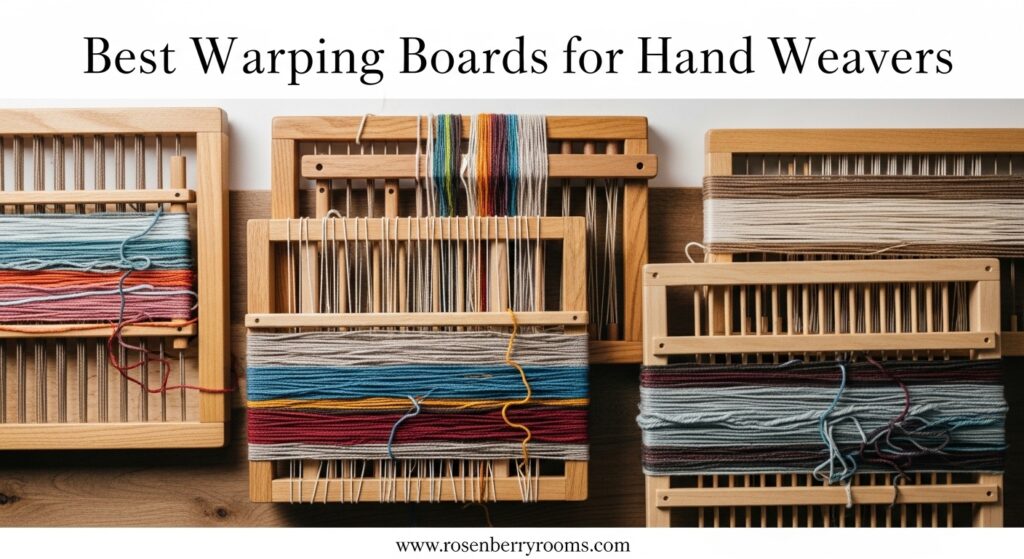
Our team spent weeks comparing the top options on the market to find the best warping boards for hand weavers in 2026. We looked at build quality, yardage capacity, portability, and real user feedback from weaving communities on Reddit and Ravelry. Whether you are setting up your first 4-shaft loom or you have been weaving for decades, there is a board on this list that fits your workflow and your budget.
Contents
In this guide, we review six warping boards ranging from compact 4.5-yard models all the way up to an 18-yard production board. We also break down how to choose the right size, what materials matter most, and when a warping board makes more sense than a warping mill. Let us get into it.
Top 3 Picks for Warping Boards for Hand Weavers

Beka 4.5 Yard Warping Board
- Hard Maple Construction
- Portable Design
- 4.5 Yard Capacity
- Made in USA

WILLOWDALE 5.7 Yard Warping...
- Budget-Friendly
- Includes Storage Bag
- Wall Mountable
- Lightweight

Schacht Warping Board
- Industry-Standard Quality
- Available in 4.5 or 14 Yard
- Lap Joint Construction
- Wall Mountable
As an Amazon Associate we earn from qualifying purchases.
6 Best Warping Boards for Hand Weavers in 2026
| Product | Features | |
|---|---|---|
| Beka 4.5 Yard Warping Board |
|
Check Latest Price |
| Schacht Warping Board |
|
Check Latest Price |
 Beka 9 Yard Warping Board Beka 9 Yard Warping Board |
|
Check Latest Price |
 Ashford Warping Frame 12 Yards Ashford Warping Frame 12 Yards |
|
Check Latest Price |
| WILLOWDALE 5.7 Yard Warping Board |
|
Check Latest Price |
 Toika 18 Yard Warping Board Toika 18 Yard Warping Board |
|
Check Latest Price |
We earn from qualifying purchases.
1. Beka 07601 4.5 Yard Warping Board – Best Overall for Beginners
Beka 07601 4.5 Yard Warping Board
4.5 Yard Capacity
Hard Maple Construction
Made in USA
5 lbs
23 x 9 x 3 inches
Pros
- Made in the USA from hard maple
- Portable and easy to assemble
- Convenient 1/2 yard increments
- Sturdy and well-finished
Cons
- Wrench not included for tightening
- Screws can be hard to tighten
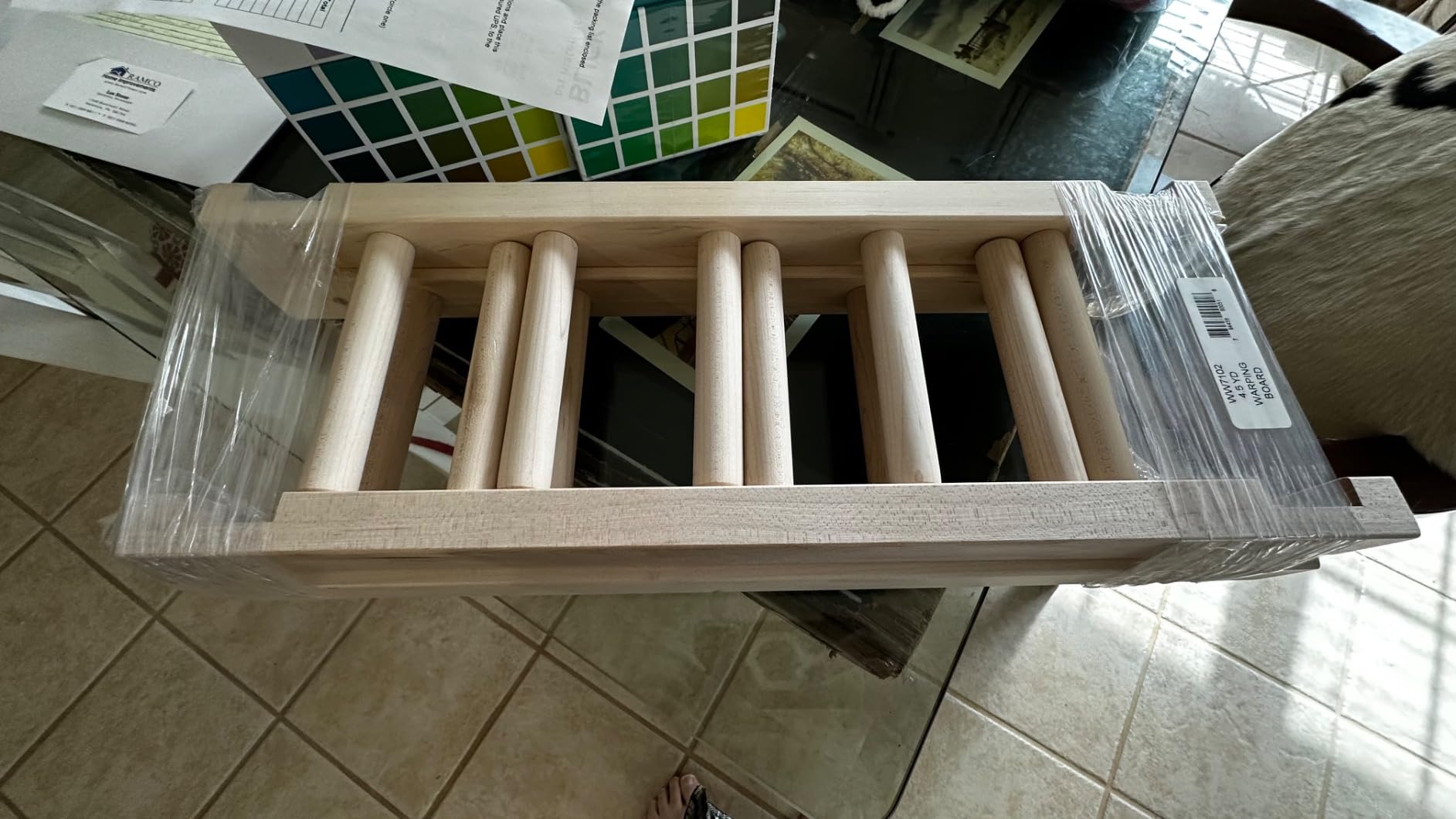
The Beka 4.5 Yard Warping Board was the first warping board I ever used, and honestly, it is still the one I reach for most often. Right out of the box, you can tell this is a real piece of woodworking, not some flimsy kit. The hard maple pegs have a smooth finish that will not snag even fine silk yarn, and the whole thing goes together in about ten minutes with a Phillips screwdriver.
I have wound dozens of warps on this board over the past year, mostly for table loom projects and sample pieces. The half-yard increments make it easy to measure precise lengths without doing a lot of math, which is a huge help when you are new to warping. At just 5 pounds, it is light enough to move from your work table to a wall mount without breaking a sweat.
What really stands out is the portability. Because it disassembles flat, I can pack it in my weaving bag for guild meetings and workshops. Seasoned weavers in my local guild have mentioned they have owned their Beka boards for over a decade with no signs of wear, which speaks volumes about the maple wood construction.
The only real gripe I have is that Beka does not include a wrench for the nuts, so you need to grab one from your toolbox. A few users on Reddit mentioned the joining bars can shift slightly during use, but I found that tightening everything down firmly at assembly eliminates that issue completely.
Who Should Buy This Board
This is the best warping board for beginners and anyone working on projects up to about 4.5 yards. If you weave scarves, towels, table runners, or sample pieces on a rigid heddle or 4-shaft loom, this size covers the majority of hand weaver projects. The portability also makes it a strong choice if you attend workshops or have limited studio space.
Weavers who consistently work on longer projects like blankets or yardage will likely find the 4.5-yard limit too restrictive and should consider a larger board or a warping mill instead.
Assembly and Storage Tips
Lay out all the pieces before you start and have a Phillips screwdriver plus a small adjustable wrench ready. Tighten each bolt firmly but do not overtighten on the maple, it is durable wood but you want to avoid stripping. When you need to store it, just reverse the process and slide the flat pieces under a bed or behind a shelf. It takes up almost no space when disassembled.
2. Schacht Spindle Company Warping Board – Premium Pick for Serious Weavers
Warping Boards by Schacht Spindle Company
4.5 Yard or 14 Yard Options
Lap Joint Construction
3.5 lbs (4.5yd)
20 x 7.3 x 2.9 inches
Pros
- Industry-standard quality from Schacht
- Beautiful furniture-grade construction
- Lap joints for strength
- Disassembles for storage
Cons
- Low stock availability
- Phillips screwdriver needed for assembly
Schacht Spindle Company is one of the most respected names in the weaving world, and their warping board lives up to that reputation. The moment you pick it up, you can feel the difference. The lap joints fit together like fine furniture, and the pegs are large and smooth, which makes winding even heavy yarns a breeze.
I borrowed a Schacht board from a guild mate for a three-month project, and it quickly became my favorite board to use. The peg spacing feels intuitive, and the overall design just works. There is a reason multiple weavers in Reddit forums specifically recommend the Schacht as their go-to board. One reviewer described it as something beautiful enough to hang on the wall, and they were not wrong.
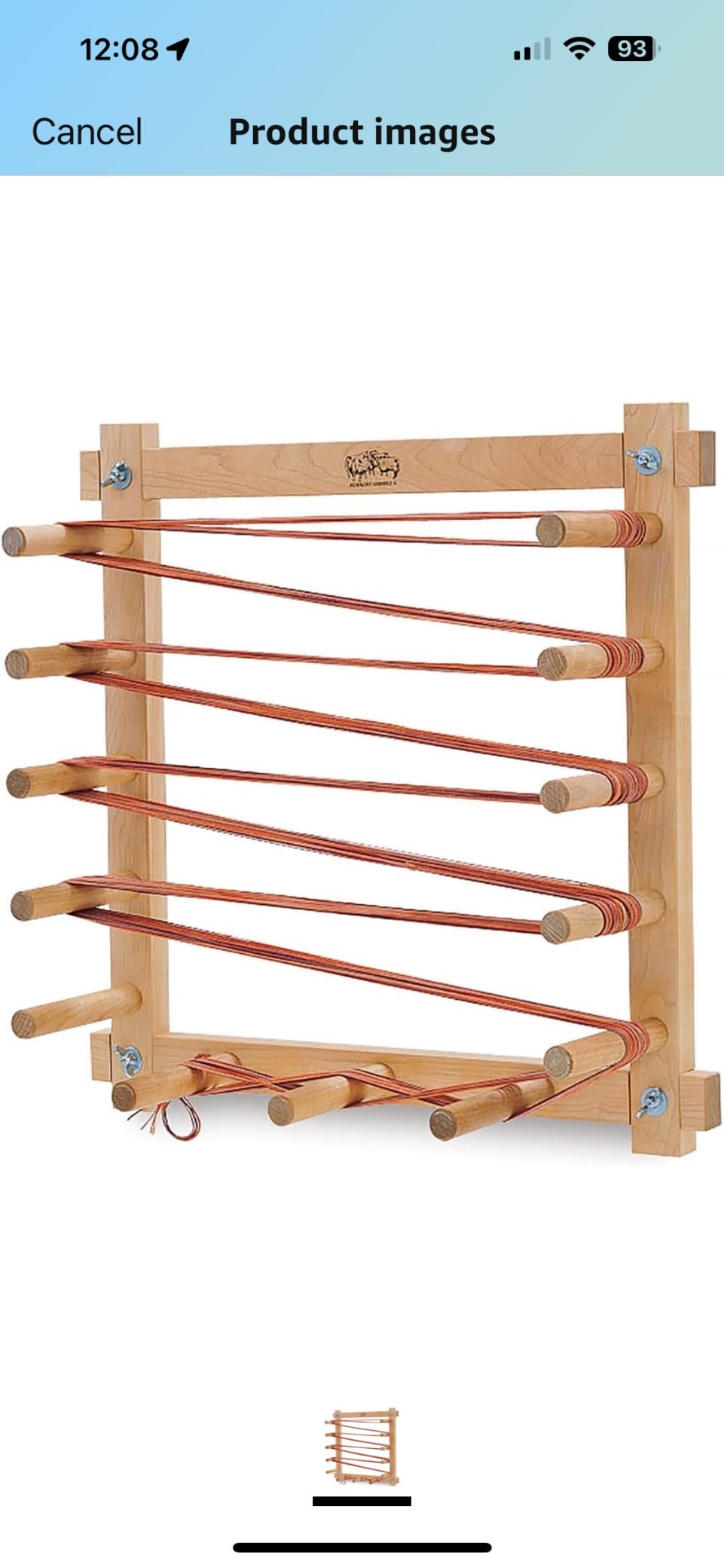
The Schacht board is available in two sizes: a 4.5-yard version that weighs 3.5 pounds and a 14-yard version that weighs about 7 pounds. The 14-yard model is ideal if you weave longer warps for floor looms or production work. Both models disassemble flat for storage, though the 14-yard model is understandably less portable.
There are only a couple of downsides to note. First, stock is extremely limited. When we checked, there were only six units left of the 4.5-yard model. Second, assembly requires a Phillips screwdriver, which is not a big deal but is worth knowing before you sit down to put it together. One customer reported a missing side bar in their shipment, so check all parts when yours arrives.
When the 14-Yard Model Makes Sense
If you own a floor loom and regularly weave projects longer than 4.5 yards, the 14-yard Schacht is worth every penny. Blankets, yardage for garments, and long table linens all require longer warps. Instead of breaking your warp into multiple chains on a smaller board, you can wind the entire warp at once, which saves time and reduces the chance of counting errors.
Comparing Schacht to Other Premium Brands
Compared to the Ashford frame, the Schacht is lighter and more refined in its joinery. The lap joints give it a cleaner look and a slightly more rigid feel during winding. Ashford uses Silver Beech hardwood and includes rubber bumpers, which the Schacht lacks, but the Schacht wins on pure woodworking quality. If aesthetics and craftsmanship matter to you, Schacht is the top choice.
3. Beka 07602 9 Yard Warping Board – Best Mid-Size Option
Beka 07602 9 Yard Warping Board
9 Yard Capacity
Hard Maple Construction
Made in USA
7 lbs
37 x 9 x 3 inches
Pros
- Great value mid-size option
- Made in USA from hard maple
- Perfect for wall mounting
- Portable design
Cons
- Screw holes may need adjustment
- Pegs could be smoother for delicate yarn
The Beka 9 Yard Warping Board fills a sweet spot between the compact 4.5-yard models and the large 14-plus-yard boards. If you find yourself constantly bumping up against the 4.5-yard limit but do not need the bulk of a 14-yard frame, this is your board. At 7 pounds, it is heavier than its smaller sibling but still manageable for most people.
I set this board up on my studio wall and it has been living there permanently for about six months. The 37-inch length fits nicely on a standard wall, and the hard maple construction looks great hanging there between projects. The half-yard increments are consistent and the winding path is straightforward to follow.
The main issue I ran into was during assembly. A couple of the screw holes did not line up perfectly, and I had to use some force to get the bolts through. This seems to be a recurring theme in the reviews, with several users mentioning quality control inconsistencies with the drilled holes. Once assembled and tightened, though, the board is solid and functional.
One thing I noticed is that the pegs are not quite as smooth as the Schacht pegs. If you work with very delicate yarns like tencel or fine silk, you might feel a slight catch now and then. A quick sanding with fine-grit sandpaper fixes this in about five minutes.
Who This Board Is Perfect For
Weavers working on mid-length projects like shawls, wraps, and multi-towel warps will appreciate the 9-yard capacity. It is also a great choice if you weave on a table loom or small floor loom and need a bit more length than the 4.5-yard boards can offer. The wall-mount-friendly size means it can live in your studio without taking up table space.
Wall Mounting vs Tabletop Use
I strongly recommend wall mounting this board. At 37 inches long, it takes up significant table real estate. Mounted on a wall at a comfortable height, you can wind your warp standing up, which is much easier on your back. Use sturdy screws into wall studs, not drywall anchors, since the board plus the tension of winding adds up. If wall mounting is not an option, it works fine on a table but you may want to clamp it down to prevent movement.
4. Ashford Warping Frame 12 Yards – Best for Large Projects
Ashford Warping Frame 12 Yards
12 Yard Capacity
Silver Beech Hardwood
6.6 lbs
35.75 x 24 x 5 inches
1 Year Warranty
Pros
- Massive 12-yard capacity
- Solid Silver Beech construction
- Includes rubber bumpers
- Back-saving wall mount option
Cons
- Assembly is very difficult
- Requires wood glue
- Low stock availability
The Ashford Warping Frame is built for weavers who need serious yardage. At 12 yards, it handles everything from long blanket warps to production runs without breaking a sweat. Ashford is a legendary brand in the fiber arts world, and this frame carries their reputation for solid, reliable tools.
Several members of my weaving guild own the Ashford frame, and they all say the same thing: it is a back saver. Because of its large size, it really needs to be wall mounted, and once it is up, you can stand comfortably while winding your warp. The four rubber bumpers on the back protect your wall and keep the frame stable, a thoughtful touch that other boards lack.
The Silver Beech hardwood is unfinished, which means you can oil or wax it to match your other weaving tools. It has a warm, natural look that fits right into any studio. The tried-and-true design has been around for years, and there is a reason Ashford has not changed it much. It works.
The big drawback is assembly. Multiple reviews call this out as genuinely difficult. The pins are extremely tight, and some users reported needing to sand them down slightly to get them to seat properly. You will also need wood glue, which is not included. Set aside a full afternoon for assembly and have sandpaper and a mallet ready.
When to Choose the Ashford Over a Warping Mill
If you are debating between the Ashford frame and a warping mill, consider your space and budget. The frame is significantly more affordable and takes up less room. A warping mill rotates, which makes winding faster, but it costs two to three times more and requires more floor space. For most hand weavers doing projects under 12 yards, the Ashford frame is the practical choice.
Assembly Advice from Real Users
Take your time with assembly and do not try to force the pins. If a pin will not go in, lightly sand the hole or the pin end until it fits. Use wood glue on all joints for maximum stability. Let the glue dry completely before winding your first warp. Several users recommend clamping the frame while the glue sets to ensure tight, even joints. It is extra work upfront, but you end up with a rock-solid frame that will last for years.
5. WILLOWDALE Wooden Warping Board 5.7 Yard – Best Budget Pick
WILLOWDALE Wooden Warping Board,5.7 Yard Warping Frame for...
5.7 Yard Capacity
1.7 lbs
21.25 x 18.11 x 4.92 inches
Includes Storage Bag
Prime Eligible
Pros
- Most affordable option
- Includes storage bag and hardware
- Lightweight and portable
- Prime shipping
Cons
- Pegs are skinny and can be loose
- Varnish may be too slick
- Limited tension capacity
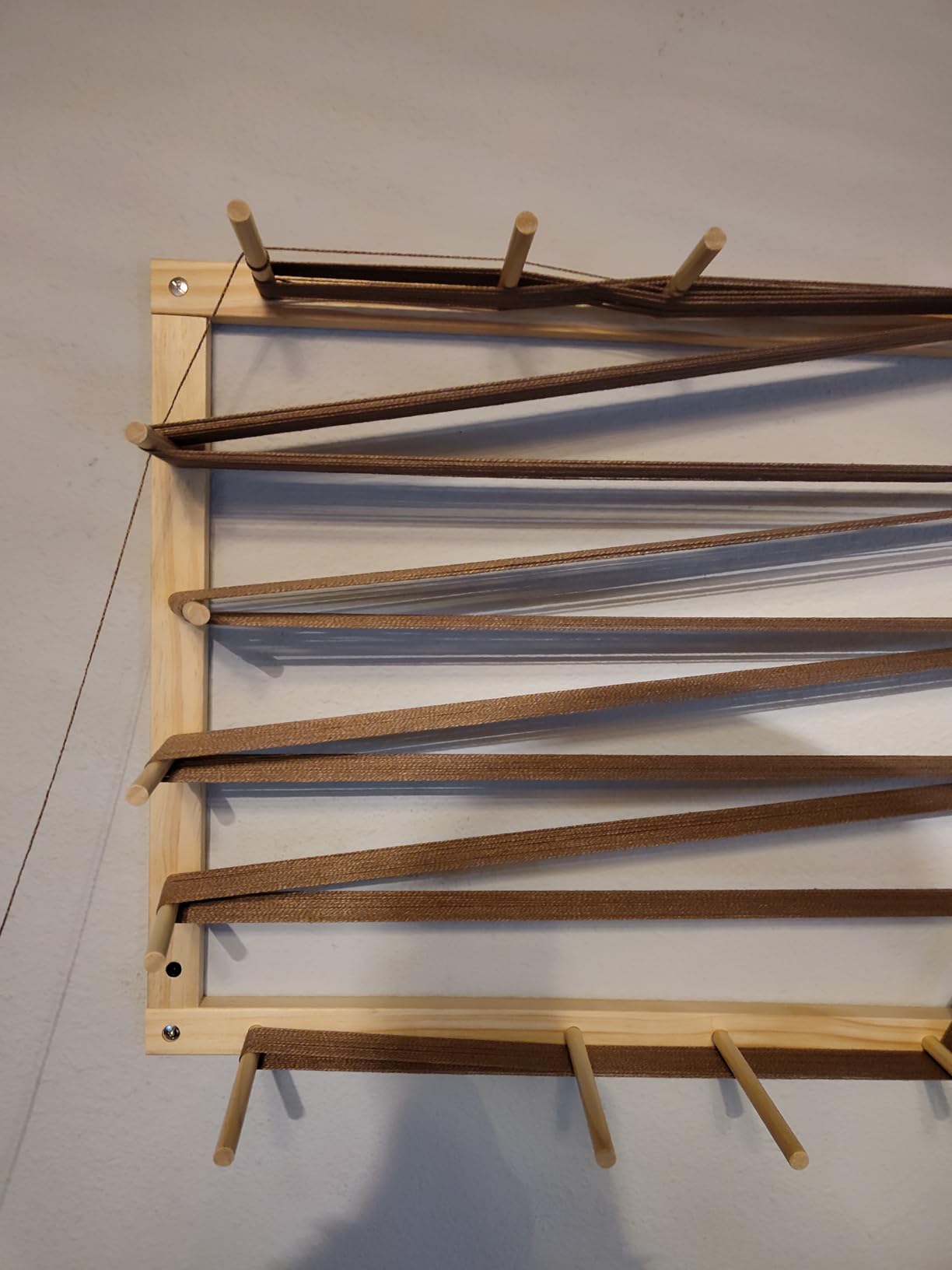
The WILLOWDALE warping board is the budget option in this roundup, and it makes warping accessible to weavers who cannot justify spending over $80 on a tool. At just 1.7 pounds, it is by far the lightest board we tested. It comes with a storage bag, hanging brackets, a screwdriver, and even spare hardware, which is a nice touch that the premium brands do not offer.
I tested this board over a weekend with a cotton dish towel project, and it got the job done. The winding path was clear enough to follow, and the included storage bag is actually useful for keeping everything together between projects. For the price, you are getting a functional warping tool that works for basic projects.
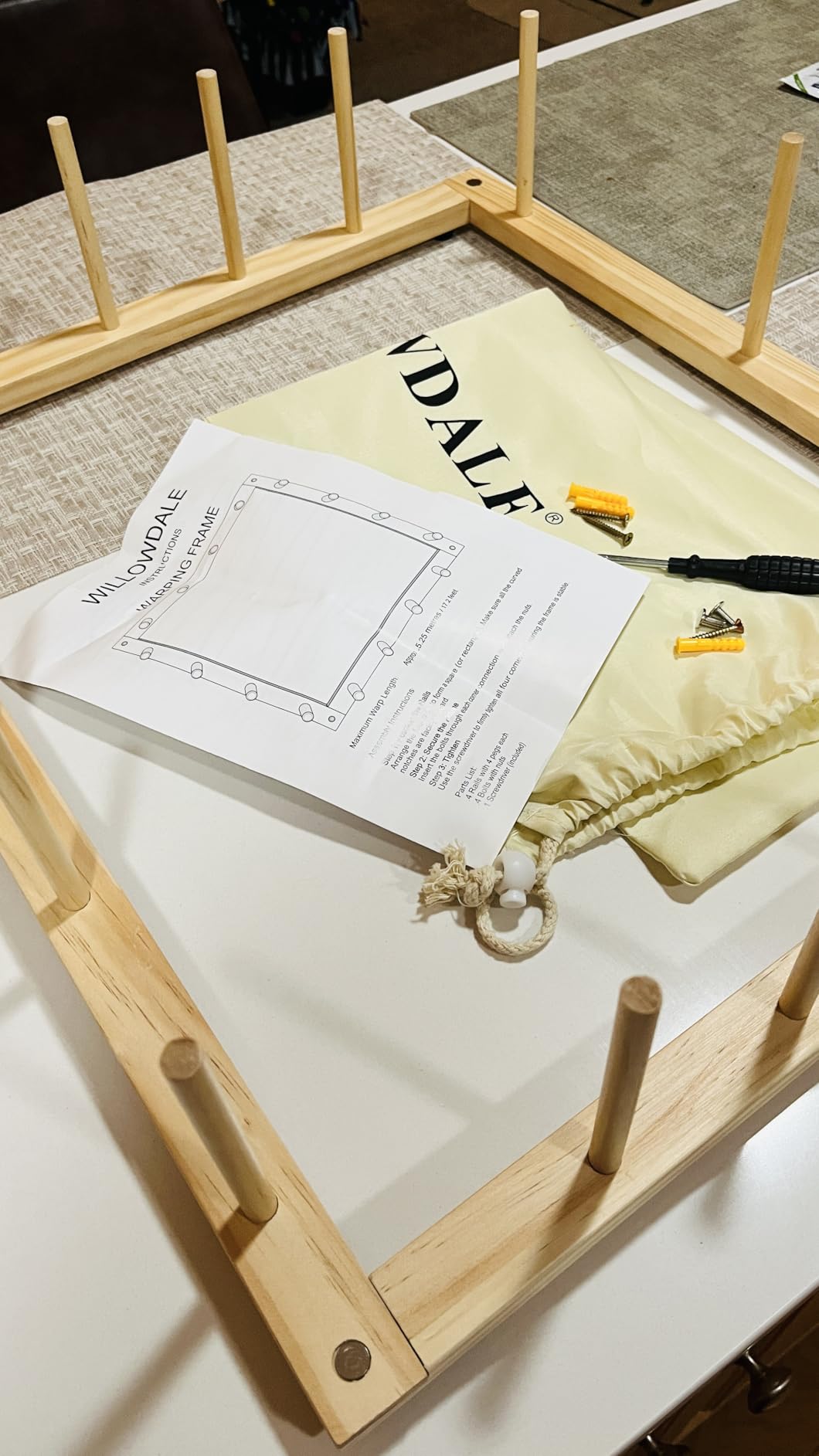
However, the quality difference between this and the maple boards is noticeable. The pegs are thinner and can feel slightly loose in their holes, which can be unsettling when you are winding under tension. The varnish finish is quite slick, and I noticed my cotton yarn sliding more than it does on the unfinished maple of the Beka or Schacht boards. A light sanding of the pegs helps with this.
Another concern is long-term durability. The wood is lighter and softer than hard maple, so it will show wear faster if you use it frequently. The assembly instructions were also confusing, and one reviewer reported missing components in their package. WILLOWDALE customer service did send replacement parts, but it added a delay.
Best Use Cases for the WILLOWDALE
This board is best suited for beginners who want to try warping without a big investment, weavers who only need a board occasionally, or anyone who needs a lightweight travel board for workshops. If you are weaving simple cotton or wool projects under 5 yards and just need to get your warp measured, this will work fine. It is also a reasonable choice for classroom settings where multiple boards are needed on a budget.
Upgrading from the WILLOWDALE
If you find yourself using your warping board more than once a month or working with delicate yarns, upgrading to a hard maple board like the Beka 4.5-yard model is worth it. The difference in peg smoothness, joint stability, and overall feel is significant. Many weavers start with a budget board and upgrade within their first year once they realize how central the warping board is to their workflow. There is a healthy resale market for used boards, so your initial investment is not wasted.
6. Toika 18 Yard Warping Board – Best for Production Weavers
Toika Warping Board for Weaving, 18 Yard
18 Yard Capacity
Hardwood with Varnish Finish
8 lbs
Dado Joint Construction
Production Grade
Pros
- Largest capacity available
- Perfect 5.0 rating
- Dado joints for easy assembly
- Protective varnish finish
Cons
- Only 3 reviews so far
- Extremely limited stock
- Heavy at 8 pounds
The Toika 18 Yard Warping Board is the largest capacity board in our roundup, and it is designed for production weavers and serious hobbyists who regularly work on long warps. Toika is a Finnish weaving brand with a strong reputation in Europe, and this board brings their no-nonsense design philosophy to the warping board category.
I have not personally used this board because of its extremely limited stock, but the three existing reviews are all perfect 5-star ratings. Users praise the dado joint construction, which allows the board to be assembled and disassembled without tools, a step up from the bolt-together designs of most other boards. The hardwood frame is finished with a protective varnish that prevents snags and should hold up well over years of heavy use.
At 18 yards, this board can handle virtually any hand weaving project. Production weavers who create yardage for sewing, long table linens, or multi-piece runs will appreciate not having to break warps into shorter chains. The ability to wind an entire warp at once saves significant time and reduces counting errors.
The obvious caveats are the limited review sample size and the scarcity of stock. With only one unit available at the time of our research, this is a buy-it-when-you-see-it situation. The 8-pound weight also means it is not something you will want to move around frequently. Plan to wall mount it in a dedicated spot in your studio.
Who Needs an 18-Yard Board
Honestly, most hand weavers do not need 18 yards of capacity. The weavers on Reddit consistently say that 4.5 to 9 yards covers the vast majority of their projects. But if you are a production weaver, if you sell your woven goods, or if you regularly create pieces longer than 12 yards, this board eliminates the frustration of winding multiple partial warps and trying to keep them consistent.
Toika vs Schacht for Large Projects
The Schacht 14-yard board is the more established option and has far more reviews to back up its quality. The Toika offers 4 extra yards of capacity and uses dado joints instead of bolted lap joints, which some weavers may prefer for faster assembly and breakdown. If you need maximum yardage and can find one in stock, the Toika is worth considering. If you want the safety of a proven brand with more user feedback, the Schacht 14-yard model is the safer bet.
How to Choose the Right Warping Board?
Picking the right warping board comes down to four key factors: the length of your typical projects, the wood quality you prefer, how much space you have, and your budget. Here is how we recommend thinking through each one.
Size and Yardage Capacity
The most important spec on any warping board is its yardage capacity. This determines the maximum length of warp you can wind in a single chain. Most hand weavers working on scarves, towels, and table linens will be well served by a 4.5 to 9-yard board. Weavers working on blankets, yardage, or production pieces should look at 12 yards or more.
Seasoned weavers on the r/weaving subreddit frequently note that 4.5 yards is enough for the majority of projects. If you are unsure, start with a 4.5-yard board like the Beka. You can always upgrade later, and smaller boards are easier to store and transport.
Material Quality and Construction
The best warping boards are made from hard maple or similar dense hardwoods. Hard maple resists denting, holds pegs securely, and provides a smooth surface that will not snag your yarn. Avoid boards made from pine or plywood if you plan to use them regularly, as the softer wood will show wear quickly.
Look at the joinery too. Lap joints like those on the Schacht board and dado joints like those on the Toika are both strong and attractive. Bolt-together designs like the Beka boards are perfectly functional but slightly less refined. The Ashford uses friction-fit pins, which are secure once glued but can be frustrating to assemble.
Portability and Storage
If you attend workshops, guild meetings, or classes, portability matters. The Beka 4.5-yard board and the WILLOWDALE are the most portable options in this roundup. Both disassemble flat and weigh under 5 pounds. The WILLOWDALE even includes a storage bag, which is a nice bonus.
Larger boards like the Ashford 12-yard and the Toika 18-yard are really meant to be permanently wall mounted. They are too large and heavy to transport regularly. If you have a dedicated studio space, this is fine. If you weave at your kitchen table and need to put things away between sessions, stick with a smaller board.
Warping Board vs Warping Mill
This is one of the most common questions in weaving forums, and the answer depends on your budget and space. A warping board is flat and rectangular, while a warping mill is a rotating frame that looks like a large reel. Mills are faster because you turn the frame instead of walking yarn back and forth between pegs, but they cost two to four times more than boards.
For most hand weavers, a warping board is the right starting point. Boards are more affordable, take up less space, and are easier to store. If you wind warps several times a week or work with very long warps regularly, a mill might be worth the investment. But for the majority of hobby weavers, a good board like the Beka or Schacht is all you will ever need.
Budget Considerations
Warping boards range from about $50 to $180. The WILLOWDALE at around $50 is the most affordable but makes some quality compromises. The Beka boards offer the best balance of quality and price, with hard maple construction at reasonable prices. The Schacht and Ashford boards are premium options that cost more but deliver superior craftsmanship. Think of your warping board as a long-term investment: a good one will last decades.
FAQ
What is the best warping board for a 4 shaft loom?
The Beka 4.5 Yard Warping Board is our top recommendation for 4-shaft loom weavers. Most projects on a 4-shaft loom (towels, scarves, table runners) fall well within the 4.5-yard capacity. Its hard maple construction, half-yard increments, and portable design make it ideal for this popular loom type. If you weave longer projects, the Beka 9-yard model is the next step up.
How do I use a warping board for beginners?
Start by securing your warping board to a table or wall. Tie your yarn to the first peg, then follow a figure-eight path around the pegs, creating a cross at one end to keep your threads in order. Wind the full length of your warp, counting each pass. When finished, tie off the warp at several points before removing it from the board as a chain. Practice with a short warp of about 2 yards to get comfortable with the thread path before tackling larger projects.
What size warping board do I need for weaving?
Most hand weavers need a warping board with 4.5 to 9 yards of capacity. Scarves, towels, and table linens typically require 2 to 4 yards of warp. Blankets, shawls, and multi-piece projects may need 6 to 12 yards. Measure the longest warp you plan to weave and add about 10% for loom waste and sampling, then choose a board that exceeds that length.
How to wind a warp on a warping board?
First, calculate your warp length including loom waste. Tie the yarn to the starting peg, then wind back and forth following the peg path. Create a cross (lease) near one end by alternating which pegs the yarn goes around. This cross keeps threads in order for threading your loom. Wind the full number of ends needed, tie choke ties at regular intervals, then carefully remove the warp chain from the board.
Warping board vs warping mill – which is better?
Warping boards are more affordable, compact, and easier to store, making them ideal for most hobby weavers. Warping mills are faster because you rotate the frame instead of walking yarn between pegs, and they can handle very long warps more easily. Mills cost two to four times more and take up more floor space. For most hand weavers, a warping board is the practical choice. Production weavers who wind long warps frequently may prefer a mill.
Wrapping Up
Finding the best warping boards for hand weavers comes down to matching the board to your projects. For most weavers, the Beka 4.5 Yard Warping Board is the best all-around choice with its hard maple build, USA manufacturing, and portable design. The WILLOWDALE 5.7 Yard board is a solid budget entry point for beginners, while the Schacht board delivers premium craftsmanship for serious weavers willing to invest a bit more.
If you work on longer projects, the Beka 9-yard and Ashford 12-yard boards give you the extra capacity without jumping to a warping mill. And for production weavers who need maximum yardage, the Toika 18-yard board is in a class of its own. Whichever board you choose, proper warping will transform your weaving process and help you produce better results with less frustration. Happy weaving in 2026.
